If you work with commercial or industrial insulation for piping, boilers, or vessels, you’ve likely encountered mineral wool ASTM standards like C547, C592, C612, and C553. These mineral wool specifications are critical for selecting materials that ensure thermal efficiency, safety, and compliance. But with similar names, how do you choose the right one?
This mineral wool insulation guide cuts through the confusion. We’ll break down the key differences between ASTM C547, C592, C612, and C553, focusing on product form, application, and critical selection criteria to help you make an informed decision.
Quick Summary: Core Differences at a Glance

The primary difference between these mineral wool insulation types lies in the physical form of the insulation and its intended application:
- ASTM C547: Covers pre-formed rigid pipe insulation for standard-sized pipes.
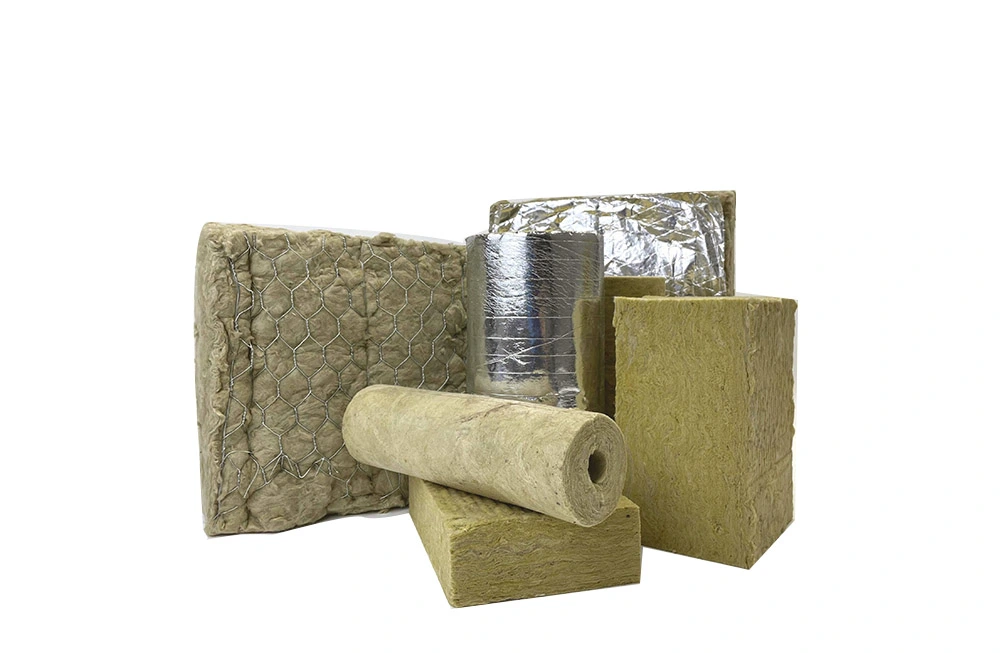
- ASTM C592 & C553: Both cover flexible blanket insulation for large pipes, vessels, and irregular surfaces. C592 is often associated with heavier-duty applications.
- ASTM C612: Covers rigid board and block insulationfor flat or curved surfaces requiring high structural strength.
Detailed Comparison of Mineral Wool ASTM Standards
Let’s dive deeper into the scope, applications, and key properties of each standard.
1. ASTM C547 (click to download): Mineral Wool Pipe Insulation Standard
- Product Form:Pre-formed, rigid or semi-rigid tubes and pipe shells.
- Primary Application:Insulation for standard-sized pipes identified by Nominal Pipe Size (NPS). These shells have a longitudinal cut for easy installation.
- Key Characteristics:
- Designed for a precise fit on specific pipe diameters.
- Offers excellent structural integrity once installed.
- High maximum use temperature (up to 1400°F / 760°C).
- Ideal For:Standard industrial piping systems in refineries, power plants, and HVAC.
2. ASTM C592(click to download):
Standard Specification for Mineral Fiber Blanket Insulation and Metal Mesh Facing (Industrial Type)
- Product Form:Flexible blanket insulation. It often includes a metal mesh facer and is secured with heat-resistant metal bands.
- Primary Application:Insulating large-diameter pipes(typically 24 inches and above), tanks, vessels, and expansion joints.
- Key Characteristics:
- Excellent for wrapping large or irregularly shaped equipment.
- Fibers are oriented primarily parallel to the heat surface.
- Maximum use temperature is typically up to 1200°F (649°C).
- Ideal For: Power generation boilers, large industrial tanks, and ductwork.
3. ASTM C553(click to download):
Standard Specification for Mineral Fiber Blanket Insulation (Industrial Type)
- Product Form: Flexible blanket insulation. It is very similar in nature to C592 and is often considered a subset or a specific type of mineral fiber blanket.
- Primary Application: General-purpose insulation for pipes and equipment, especially where complex shapes require flexible wrapping.
- Key Characteristics:
- Provides versatility for various industrial applications.
- Like C592, it is a flexible blanket but may differ in specific density, thickness, or facing requirements as per the spec.
- In practice, C553 and C592 are closely related, with C592 often specified for more demanding services.
- Ideal For: General industrial piping and equipment insulation where flexibility is key.
4. ASTM C612(click to download):
Standard Specification for Mineral Fiber Block and Board Insulation
- Product Form:Rigid board or block insulation.
- Primary Application:Insulating flat or curved surfaces on large equipment like boilers, furnaces, flues, and wall systems where high compressive strength is needed.
- Key Characteristics:
- Offers the highest rigidity and compressive strength.
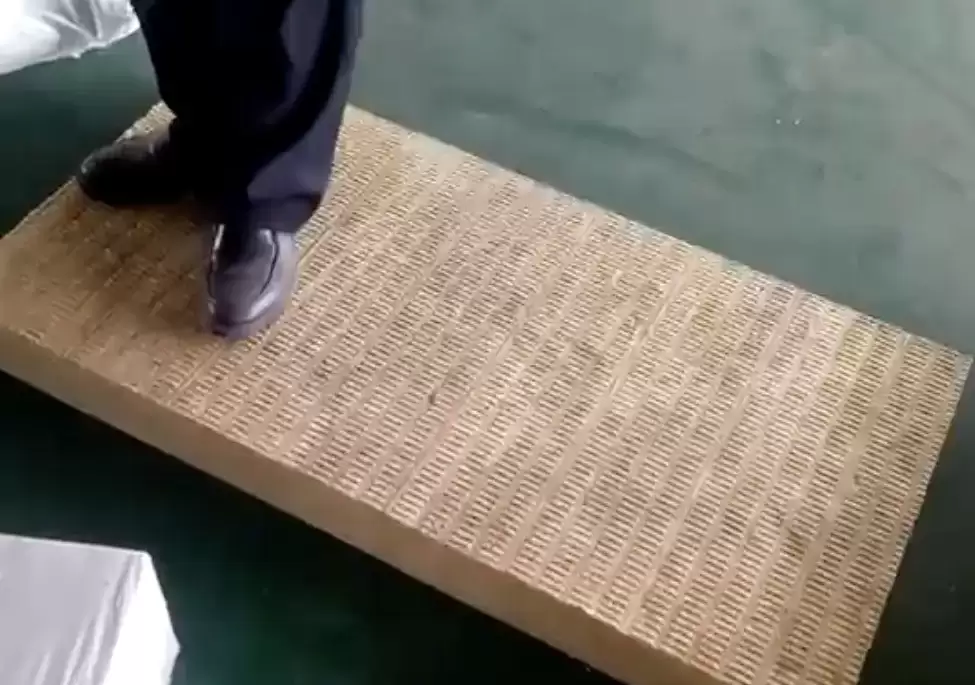
- Suitable for applications where personnel may need to walk on the insulated surface.
- Can be cut and fitted to shape. High maximum use temperature (up to 1400°F / 760°C).
- Ideal For: Boiler casings, industrial oven walls, and other surfaces requiring a strong, durable insulation layer.
How to Choose the Right Mineral Wool Standard: C547, C592, C612, or C553?
Follow this simple decision flow to select the correct standard:
- 1.1.What are you insulating?
- Standard Pipes (NPS): Choose ASTM C547 (Pre-formed Pipe Insulation).
- Large Pipes, Tanks, Vessels, or Irregular Shapes:Choose a Flexible Blanket.
- For heavy-duty applications (e.g., large power boilers), specify ASTM C592.
- For general-purpose wrapping, ASTM C553 is suitable.
- Flat/Curbed Surfaces Needing Strength: Choose ASTM C612(Rigid Board/Block).
Pro Tip:For below-ambient (cold) service applications, all these standards require the use of a proper vapor retarder to prevent moisture ingress and corrosion.
Key Question: Do ASTM C547, C592, C612, and C553 Apply to Both Fiberglass and Rock Wool?
Yes, both fiberglass (glass wool) and rock wool (stone wool) can be manufactured to comply with these ASTM standards.
These standards define requirements for “mineral fiber” insulation products, which is a category that includes both fiberglass and rock wool. The standards focus on the finished product’s performance (e.g., density, thermal resistance, strength) rather than the raw material composition. The following table shows their applicability:
| Standard | Product Form | Applies to Fiberglass? | Applies to Rock Wool? |
|---|---|---|---|
| ASTM C547 | Pre-formed Pipe Insulation | ✅ Yes | ✅ Yes |
| ASTM C553 | Flexible Blanket | ✅ Yes | ✅ Yes |
| ASTM C592 | Flexible Blanket (with metal mesh) | ✅ Yes | ✅ Yes |
| ASTM C612 | Rigid Board/Block | ✅ Yes | ✅ Yes |
Choosing Between Fiberglass and Rock Wool for Your Standard
While the standards are material-neutral, the choice between fiberglass and rock wool depends on your application’s specific needs:
- Temperature Resistance:For high-temperature applications (above 400°F / 204°C), rock wool is often preferred due to its higher melting point. Fiberglassis typically suitable for medium and lower temperatures (e.g., HVAC, plumbing).
- Compressive Strength: For equipment or platforms that require walkability, rock woolboards (ASTM C612) generally offer higher compressive strength.
- Water Resistance: Rock wool is inherently hydrophobic (water-repelling), making it a robust choice for outdoor applications or where exposure to moisture is possible.
- Acoustical Performance: Both materials provide excellent sound absorption, but the choice may depend on the specific frequency range.
The key is to check the manufacturer’s data sheet to ensure the specific product (whether fiberglass or rock wool) is tested and certified to meet the required ASTM standard for your project.
All four specifications cover mineral wool insulation products — a broad category of inorganic fibrous materials widely used in industrial thermal applications. Selecting the correct mineral wool ASTM standard ensures performance, safety, and regulatory compliance.
Conclusion: Choosing the Right Mineral Wool ASTM Standard
Understanding the distinctions between ASTM C547, C592, C612, and C553 is essential for specifying and installing effective industrial insulation. Remember:
- Use C547 for pipes.
- Use C612 for rigid, flat surfaces.
- Use C553/C592(flexible blankets) for versatile wrapping of large or complex equipment.
Mineral Wool ASTM Standards: Industry Application Guide
Selecting the correct mineral wool insulation standard is critical for meeting project specifications and ensuring long-term thermal performance. Each mineral wool ASTM standard is designed for specific product forms and installation environments. Understanding these distinctions helps engineers, contractors, and procurement teams avoid costly mis-specifications.
For high-temperature piping systems in power plants, refineries, and chemical processing facilities, ASTM C547 pipe insulation is the primary specification. It defines rigid mineral wool preformed sections tested at service temperatures from 450°F to 1200°F, depending on the grade. The standard requires dimensional tolerances and density minimums to ensure consistent thermal performance over the system lifecycle.
In industrial ductwork and large vessel insulation projects, ASTM C592 mineral wool blankets offer field-installed flexibility. These products are available in a range of densities and can conform to irregular surfaces where rigid sections would be impractical. C592 blankets are frequently used in combination with aluminum jacketing to form complete insulation systems on complex equipment geometries.
Key Performance Properties Under Mineral Wool ASTM Standards
Each mineral wool insulation standard specifies minimum performance requirements that products must meet before being used in regulated applications. These properties directly affect system energy efficiency, personnel safety, and compliance with fire codes.
Thermal conductivity (k-value) is measured at specific mean temperatures and must fall within defined limits in each standard. For example, mineral wool pipe insulation per ASTM C547 must demonstrate low thermal conductivity at elevated temperatures, ensuring energy losses remain within design parameters. The compressive strength requirement in ASTM C612 ensures rigid boards maintain their geometry under load without settling, which would compromise insulation thickness and performance over time.
Moisture resistance is another critical property addressed across the mineral wool ASTM suite. While mineral wool inherently resists moisture absorption better than organic fiber alternatives, proper jacketing and vapor barrier systems are still required in below-ambient or high-humidity environments. Specifiers should review the moisture content and water vapor sorption limits defined in each standard when designing systems for cold pipe or refrigeration applications.
Frequently Asked Questions About Mineral Wool ASTM Standards
By matching the mineral wool insulation standard to your specific application, you ensure optimal performance, safety, and longevity of your thermal systems. EcoIn manufactures a full range of mineral wool products that meet these ASTM specifications.