A Technical Note by ECOIN INSULATION
Aluminum jacketing discoloration is a common surface phenomenon that affects industrial insulation systems worldwide. This technical note explains the causes, assessment criteria, and best practices for managing aluminum jacketing discoloration effectively.
Overview
Aluminum jacketing is valued for its durability and corrosion resistance; however, surface discoloration may occur due to oxidation when exposed to moisture during transportation, handling, or storage.
Cause of Surface Oxidation
Surface discoloration/oxidation is a superficial condition caused by prolonged contact between moisture and the aluminum surface, often resulting from condensation or trapped humidity.
This condition typically occurs prior to installation and is influenced by temperature fluctuations, high humidity, and limited airflow.
Material Analysis and Test Results
We conducted material analysis on affected areas in a Canada lab, Element-Cambridge.The relevant excerpt from the laboratory report is provided below. The full report is available upon request.
- Compositional analysis of the affected regions revealed elevated oxygen content, confirming that the surface condition is primarily associated with the formation of aluminum oxide. The oxidized areas exhibited particulate features, in some cases
with a cracked, “dry mud” appearance, indicating prior contact with water that subsequently dried.
- The oxidation was found to be very superficial in nature and did not affect the integrity of the aluminum rolls.
- Cross-sectional examination showed no metallurgical discontinuities or internal flaws in the aluminum material.
Impact on Performance
While surface oxidation may affect appearance, it does not compromise the physical strength, structural integrity, or protective performance of the aluminum jacketing. The condition is cosmetic in nature and does not indicate a defect in material quality.
Storage and Handling Recommendations
- Store aluminum jacketing indoors, under cover, in dry and well-ventilated areas
- Minimize exposure to moisture and temperature cycling during storage and transport
- Allow aluminum to acclimate gradually when moving between different temperature environments
- Inspect material prior to installation
Conclusion
Surface oxidation and discoloration are known and well-understood characteristics of aluminum when exposed to moisture under certain conditions.
Based on industry knowledge and our laboratory testing, this condition is cosmetic only and does not affect the overall composition, structure, or performance of the aluminum jacketing.
What Causes Aluminum Jacketing Discoloration?
Aluminum jacketing discoloration is one of the most frequently reported surface conditions in industrial insulation projects. While it may appear alarming on first inspection, understanding the root causes helps facility managers make informed maintenance decisions. The five main causes of aluminum jacketing discoloration are oxidation, moisture ingress, chemical exposure, galvanic corrosion, and UV degradation.
Oxidation is the most common driver of aluminum jacketing discoloration. When aluminum reacts with oxygen in the atmosphere, a thin oxide layer forms on the surface, producing the characteristic white or grey patches visible on aged jacketing. This layer actually acts as a protective barrier, preventing further corrosion of the underlying metal.
Moisture and Chemical Exposure
Moisture trapped beneath cladding is the second leading cause of aluminum jacketing discoloration.
In humid environments or where weatherproofing seals have degraded, water ingress leads to pitting and streaking on the surface. Similarly, industrial chemicals such as chlorides, sulfates, and acids accelerate discoloration through chemical reactions with the aluminum surface. Proper installation and regular inspection help minimize these effects.
According to Wikipedia on aluminium oxide, the protective oxide film that forms on aluminum surfaces is only 4-5 nm thick but provides excellent corrosion resistance under normal conditions.
Prevention and Maintenance
Preventing aluminum jacketing discoloration starts with correct specification and installation. At EcoIn, we supply high-quality aluminum jacketing manufactured to strict tolerances, with enhanced coatings available to resist surface discoloration in aggressive environments. Routine visual inspection every 12-24 months allows early detection before cosmetic issues develop into structural concerns.
In summary, aluminum jacketing discoloration is almost always cosmetic in nature and does not compromise the insulation system’s thermal performance. With proper material selection and maintenance, the service life of aluminum jacketing can exceed 20 years even in demanding industrial settings.
Frequently Asked Questions
How to Assess and Address Aluminum Jacketing Discoloration
When aluminum jacketing discoloration is detected during a routine inspection, the first step is to determine whether it is purely cosmetic or indicative of an underlying problem. A systematic assessment follows three stages: visual evaluation, tactile inspection, and thickness measurement.
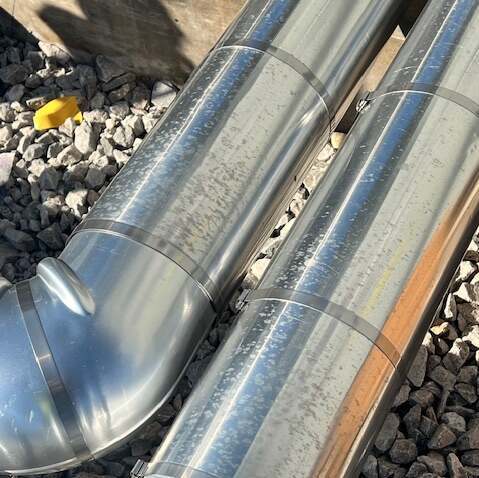
During visual evaluation, inspectors document the extent, color, and distribution of the aluminum jacketing discoloration. Uniform grey or white surface oxidation across large sections typically indicates normal weathering. Localized dark staining, streaking, or iridescent coloring often points to moisture ingress or chemical contamination and warrants closer investigation.
Tactile inspection involves pressing lightly on the affected area. Sound aluminum jacketing discoloration from oxidation will feel firm with no give. Soft spots, delamination, or a hollow sound under gentle tapping suggest corrosion has progressed beyond the surface layer and into the metal substrate.
Thickness measurement with an ultrasonic gauge or caliper confirms whether material loss has occurred. Aluminum jacketing below 0.4 mm remaining thickness should be scheduled for replacement, regardless of surface appearance. Above this threshold, aluminum jacketing discoloration alone does not require replacement — only cleaning or coating, depending on the operating environment.
Long-Term Management
For facilities where aluminum jacketing discoloration is a recurring concern, a proactive maintenance programme delivers the best results.
This includes applying a clear protective lacquer during installation, performing biannual washdowns in coastal or industrial zones, and using stainless steel bands rather than galvanized to prevent galvanic corrosion. EcoIn’s technical team can advise on the most cost-effective strategy for your specific site conditions.
Industry Standards for Aluminum Jacketing Discoloration Assessment
Industrial insulation professionals rely on established standards when evaluating aluminum jacketing discoloration during routine inspections. The ASTM B209 specification governs aluminum and aluminum-alloy sheet properties, while field assessment of aluminum jacketing discoloration typically follows CINI and IIAR guidelines that define acceptable surface conditions and replacement thresholds.
An inspector examining aluminum jacketing discoloration will classify surface changes into three categories: cosmetic oxidation requiring no action, moderate staining warranting increased inspection frequency, and advanced pitting or barrier breach requiring immediate remediation.
According to aluminium alloy research, the natural formation of aluminium oxide on the surface actually protects the underlying metal from deeper corrosion. This means that in most cases, aluminum jacketing discoloration observed as a grey or white chalky film is a self-limiting process. Professionals should document the extent and pattern of aluminum jacketing discoloration with photographic records at each inspection to track progression over time and make informed maintenance decisions.
EcoIn Aluminum Jacketing: Engineered to Minimise Discoloration
EcoIn manufactures aluminum jacketing to the highest specifications to delay the onset of surface discoloration across diverse operating environments. Our stucco-embossed and smooth-finish aluminum jacketing sheets are available with factory-applied polysurlyn or kraft moisture barriers, providing a reliable physical seal against the moisture ingress that triggers the most problematic forms of aluminum jacketing discoloration in coastal and high-humidity sites.
Every EcoIn aluminum jacketing roll undergoes salt-spray and humidity chamber testing before dispatch, simulating accelerated weathering to verify discoloration resistance over an equivalent 15-year service life. The standard alloy options — 1100-H14 for general purpose and 3003-H14 for improved strength — are selected specifically for their balanced corrosion resistance and workability. Both alloys provide excellent long-term resistance to the electrochemical reactions that accelerate aluminum jacketing discoloration when the system is exposed to industrial atmospheres or chloride-laden coastal air.
For projects with strict visual performance requirements, EcoIn offers PVDF-coated aluminum jacketing that substantially delays surface discoloration while providing UV stability in tropical or high-altitude installations. Our technical sales team is available to specify the correct thickness (0.4 mm to 1.0 mm), alloy, and moisture barrier combination for your project.
Whether you are managing existing aluminum jacketing discoloration or specifying new insulation systems, EcoIn’s product range and engineering support delivers solutions built for the long term. Visit our aluminum jacketing product page for full specifications and to request a quotation.
Maintenance Schedule Recommendations for Aluminum Jacketing Systems
A well-structured maintenance programme is essential for controlling aluminum jacketing discoloration throughout the asset lifecycle.
EcoIn recommends biannual visual inspections in marine or heavy industrial environments where chloride exposure and chemical fumes accelerate surface oxidation. In moderate continental climates, annual inspection is typically sufficient. Each inspection should record the location, extent, and type of aluminum jacketing discoloration — distinguishing between normal oxidative whitening and the brown or black staining that indicates contaminated water intrusion or galvanic corrosion from dissimilar metals.
Where aluminum jacketing discoloration is found in proximity to stainless steel bands, carbon steel supports, or copper pipe penetrations, the inspector should verify that insulating gaskets or isolation tape has been correctly installed to prevent ongoing galvanic attack. Proactive surface treatment with compatible aluminium-safe sealants at lap joints can significantly extend the service interval before aesthetic or structural aluminum jacketing discoloration becomes a maintenance concern.
EcoIn technical representatives can provide site-specific maintenance schedules and product recommendations based on your operating environment and insulation system design.