Rockwool vs fiberglass — two of the most widely used insulation materials in commercial construction and industrial pipework. Both deliver effective thermal and acoustic insulation, but they differ significantly in fire performance, moisture resistance, and cost. This guide compares rockwool vs fiberglass across 7 key factors to help engineers and buyers choose the right material for their project.
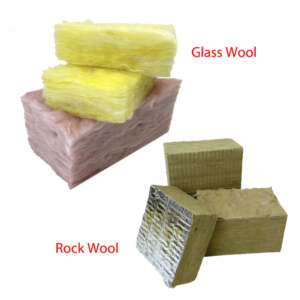
Rockwool and fiberglass are two popular insulation materials that are commonly used for various applications such as building insulation, soundproofing, and more. Here are some key differences between the two:
-
- Composition: Rockwool is made from volcanic rocks that are melted and spun into fibers, while fiberglass is made from melted glass that is spun into fibers.
- Working temperature: rock wool’s working temperature is up to 649C, while fiberglass is below 350C.
-
- Application: Rockwool is frequently utilized in industrial insulation projects, such as those in oil and power plants, because it boasts a higher operating temperature. On the other hand, fiberglass is widely used in commercial and building insulation due to its lower operating temperature.
- R-value: R-value is a measure of insulation’s ability to resist heat flow. Rockwool typically has a higher R-value per inch than fiberglass.
- Fire resistance: Rockwool is naturally fire-resistant and has a higher melting point than fiberglass, making it a better choice for applications where fire resistance is a concern.
- Moisture resistance: Both rockwool and fiberglass are resistant to moisture, but rockwool is better at resisting water absorption and has a higher resistance to mold and mildew.
- Weight: Rockwool is denser and heavier than fiberglass.
- Cost: The cost of rockwool and fiberglass insulation can vary depending on the specific product and application, but in general, fiberglass is less expensive than rockwool.
- Environmental impact: Rockwool production is energy-intensive and has a higher carbon footprint compared to fiberglass, which is made from recycled glass.
In conclusion, both rockwool and fiberglass have their own unique characteristics and can be used for various applications, but it’s important to choose the right one based on the specific requirements of your project.
Rockwool vs Fiberglass: 7 Key Differences
1. Fire Resistance
Rockwool withstands temperatures up to 1,000°C (1,832°F), making it suitable for fire-rated wall and ceiling assemblies. Fiberglass softens at 230–540°C, limiting its use in high-temperature environments. According to Wikipedia’s overview of mineral wool, rock wool is produced from natural stone and is inherently non-combustible.
2. Thermal Performance (R-Value)
Fiberglass batts provide R-2.2 to R-2.7 per inch, while rockwool delivers R-3.0 to R-3.3 per inch — roughly 20–30% better thermal resistance at equal thickness. This advantage matters greatly for energy-efficient building envelope design.
3. Moisture and Mold Resistance
Rockwool is hydrophobic and repels water by nature. Fiberglass can absorb moisture if vapor barriers fail, reducing its R-value and encouraging mold. For humid climates or chilled pipe insulation, rockwool offers greater long-term durability.
4. Acoustic Performance
Both materials absorb sound, but rockwool’s denser structure typically achieves higher noise reduction coefficients (NRC). It is the preferred choice for mechanical rooms, studio walls, and partitions requiring high STC ratings.
5. Cost
Fiberglass is generally 20–40% less expensive than rockwool, making it the budget-friendly choice for large residential projects. Industrial projects requiring superior fire resistance and moisture management often justify the premium cost of rockwool.
6. Installation
Fiberglass blankets are lightweight and easy to cut. Rockwool slabs are denser but hold their shape without compression, simplifying installation in irregular cavities. Both are available as rolls, boards, and pipe sections.
7. Environmental Impact
Rockwool typically contains 30–40% recycled slag or basalt; fiberglass can contain 40–60% recycled glass. EcoIn supplies high-quality mineral wool insulation and glass wool solutions for commercial, industrial, and HVAC applications worldwide.
Summary: Choosing Rockwool vs Fiberglass
The choice between rockwool vs fiberglass depends on performance requirements and budget. Rockwool excels in fire resistance, moisture management, and acoustics. Fiberglass is more economical and widely available. For projects where fire safety and long-term durability are priorities, rockwool is the stronger choice.
Frequently Asked Questions: Rockwool vs Fiberglass
Is rockwool better than fiberglass for fire safety?
Yes. In any rockwool vs fiberglass comparison for fire safety, rockwool is the clear winner. Rockwool is manufactured from basalt rock or slag and remains stable up to 1,000°C without melting or releasing toxic gases. It is specified in passive fire protection assemblies, fire-rated walls, and industrial pipe insulation systems where fiberglass would not qualify. Fiberglass, while non-combustible at low temperatures, will soften and potentially melt in severe fire conditions, which can compromise the structural integrity of insulated systems.
Which is better for soundproofing — rockwool or fiberglass?
Rockwool generally provides better acoustic performance than fiberglass due to its higher density. When evaluating rockwool vs fiberglass for sound insulation, rockwool typically achieves NRC values of 0.90–1.00 and higher STC ratings in wall and floor assemblies. Fiberglass offers good acoustic performance but generally at lower densities, which reduces its sound absorption coefficient. For recording studios, mechanical equipment rooms, or partition walls between offices, rockwool is the preferred choice.
Can I use fiberglass insulation in a wet environment?
Fiberglass insulation is not recommended for wet or high-humidity environments without proper vapor barriers. When comparing rockwool vs fiberglass in wet areas — such as basement walls, exterior cladding cavities, or refrigerated pipe systems — rockwool is significantly more reliable. Its hydrophobic fiber structure repels liquid water, maintaining its thermal R-value even when exposed to moisture. Fiberglass, if saturated, can lose up to 40% of its insulating value until it dries out.
Is rockwool more expensive than fiberglass?
On a material-cost basis, rockwool is typically 20–50% more expensive than comparable fiberglass products. However, a complete rockwool vs fiberglass cost analysis must consider the total lifecycle cost. Rockwool’s superior durability, moisture resistance, and fire performance often eliminate the need for additional fireproofing treatments, vapor barriers, or premature replacements — reducing total installed cost over 20–30 year building lifespans.
Which insulation material is greener — rockwool or fiberglass?
Both materials have a strong environmental profile. A rockwool vs fiberglass sustainability comparison shows: rockwool is made from abundant basalt rock and industrial slag (30–40% recycled content), while fiberglass uses sand and up to 40–60% post-consumer recycled glass. Both are 100% recyclable at end of life. Rockwool requires slightly more energy to manufacture due to higher melting temperatures, but its longer service life and superior energy performance typically deliver a net positive environmental impact over a building’s operational lifetime.
Where can I buy rockwool insulation?
EcoIn Group manufactures and exports both rockwool and fiberglass insulation products to customers in North America, Europe, Southeast Asia, and the Middle East. Our product range covers pipe sections, blankets, boards, and custom fabrications. Whether your project calls for rockwool vs fiberglass, we can supply factory-certified materials with full technical data sheets and compliance documentation. Contact our team for product specifications, pricing, and lead times.
Rockwool vs Fiberglass: Application Guide by Industry
HVAC and Mechanical Systems
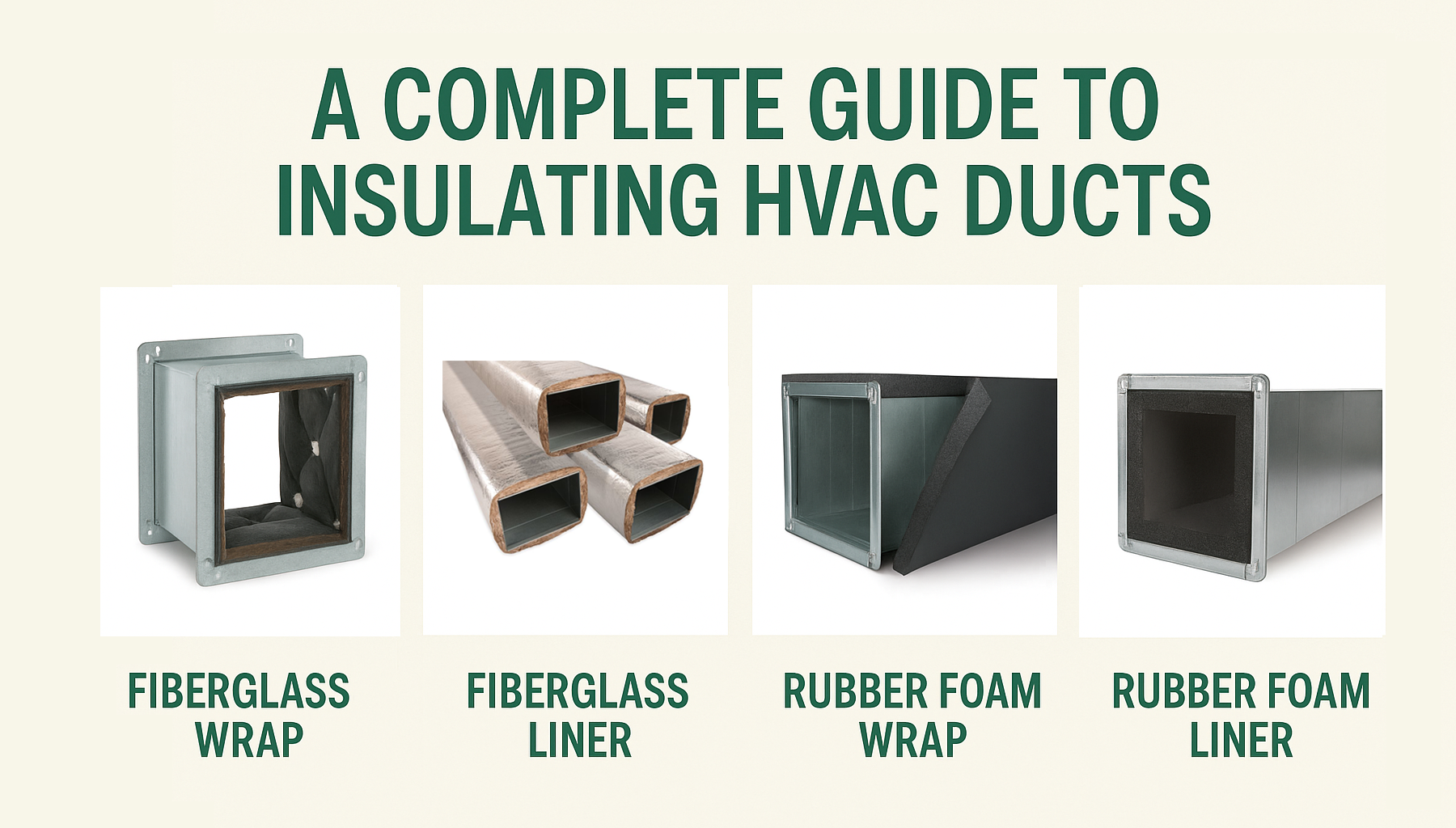
In HVAC ductwork and mechanical pipe insulation, the rockwool vs fiberglass decision often comes down to operating temperature and fire zone requirements. For supply and return air ducts in standard office buildings, fiberglass duct wrap and duct liner are the most widely used products — they are lightweight, flexible, and cost-effective. However, in smoke control ductwork, kitchen exhaust systems, and fan rooms where fire integrity is critical, rockwool duct boards and pipe sections are required by most building codes. EcoIn supplies both fiberglass duct liner and rockwool boards to HVAC contractors and building material distributors worldwide.
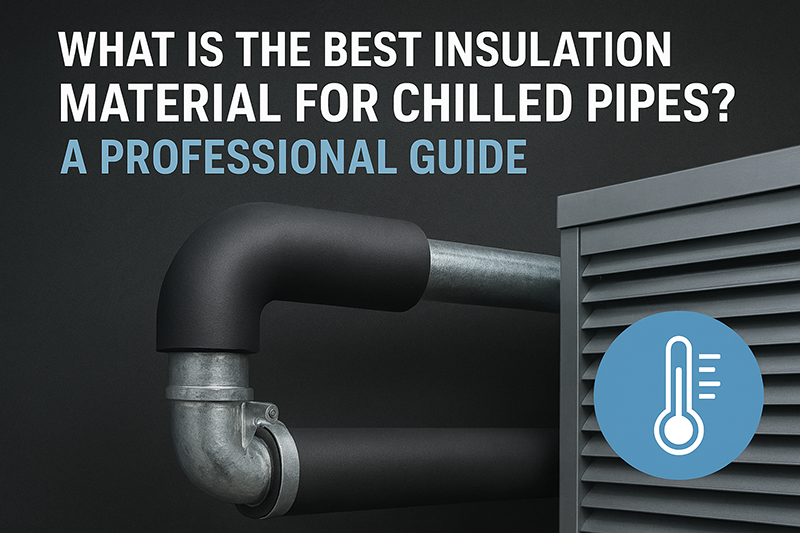
For chilled water pipe insulation, the rockwool vs fiberglass comparison shifts decisively toward rubber foam or glass wool with vapor barriers. Condensation control is the top priority in chilled systems: any insulation material that allows moisture ingress will cause corrosion under insulation (CUI) and mold growth. When specified correctly, closed-cell rubber foam outperforms both rockwool and fiberglass for chilled pipe applications below 15°C (59°F).
Industrial Process Piping
High-temperature industrial piping above 300°C demands calcium silicate or mineral wool pipe sections rather than fiberglass. In this temperature range, the rockwool vs fiberglass comparison is straightforward: fiberglass has melted and failed, while rockwool remains structurally intact and thermally effective. Petrochemical plants, power stations, and pharmaceutical manufacturing facilities rely on mineral wool pipe sections for steam lines, condensate return lines, and process reactors. EcoIn manufactures mineral wool pipe sections with densities from 60–200 kg/m³ and temperature ratings to 650°C.
Building Envelope and Wall Insulation
For external wall insulation in multi-story commercial buildings, rockwool is rapidly replacing fiberglass as the preferred material. Building codes in the UK, EU, and Canada now require non-combustible insulation in buildings over certain heights — a requirement that fiberglass can meet in some cases (it is technically non-combustible) but rockwool exceeds with its superior fire propagation resistance. In curtain wall facades, rainscreen cladding systems, and cavity wall construction, rockwool slab products provide both thermal and fire protection in a single layer, simplifying the building envelope design.
Fiberglass batts remain the dominant product for residential timber-frame walls, floors, and loft insulation in North America and Australia. The combination of low cost, easy DIY installation, and adequate thermal and acoustic performance makes fiberglass the practical first choice for standard residential construction where fire ratings are met by structural assemblies rather than insulation alone.
Acoustic and Studio Applications
Recording studios, broadcast facilities, home theaters, and office acoustic treatments form a specialized segment of the rockwool vs fiberglass market. High-density rockwool boards (60–100 kg/m³) are widely used as acoustic absorption panels behind fabric facings. They offer excellent NRC values across a broad frequency range, particularly in the mid and low bass frequencies that are most difficult to control. Fiberglass boards (e.g., 703 and 705 series) are also used extensively in studio treatment and are slightly more effective at very high frequencies, but rockwool’s density advantage gives better low-frequency control.
Rockwool vs Fiberglass: Specification Summary Table
The following summarizes the key specification differences between rockwool and fiberglass insulation for common applications:
Max Service Temperature: Rockwool up to 1,000°C; Fiberglass up to 350°C (for high-temp fiberglass products).
Thermal Conductivity (λ): Rockwool 0.033–0.040 W/m·K; Fiberglass 0.030–0.044 W/m·K.
Density Range: Rockwool 20–200 kg/m³; Fiberglass 10–96 kg/m³.
Water Absorption: Rockwool hydrophobic (<1% by volume); Fiberglass hygroscopic (varies).
Fire Classification: Rockwool Euroclass A1; Fiberglass typically A1 or A2.
Acoustic NRC: Rockwool 0.85–1.00; Fiberglass 0.70–0.95.
Relative Cost (material only): Rockwool 1.3–1.8× fiberglass for equivalent R-value.
How to Choose Between Rockwool and Fiberglass for Your Project
The final decision in the rockwool vs fiberglass debate depends on four factors: performance requirements, project budget, local building code, and installation conditions.
Choose rockwool when: fire resistance class A1 is required, operating temperatures exceed 250°C, moisture ingress is a risk, acoustic performance is critical, or the project is in a high-rise building covered by non-combustible insulation codes.
Choose fiberglass when: the project is standard residential construction, budget is the primary constraint, installation will be done by non-specialist labor, or the temperature range is within normal HVAC parameters (0–150°C).
Both materials have their place in a well-designed insulation system. Leading manufacturers like EcoIn supply both product lines and can provide technical guidance on the optimal solution for specific project conditions. Request a quote or product data sheet from our engineering team to compare rockwool vs fiberglass specifications side by side for your application.
Installation Best Practices for Mineral Wool and Fiberglass Insulation
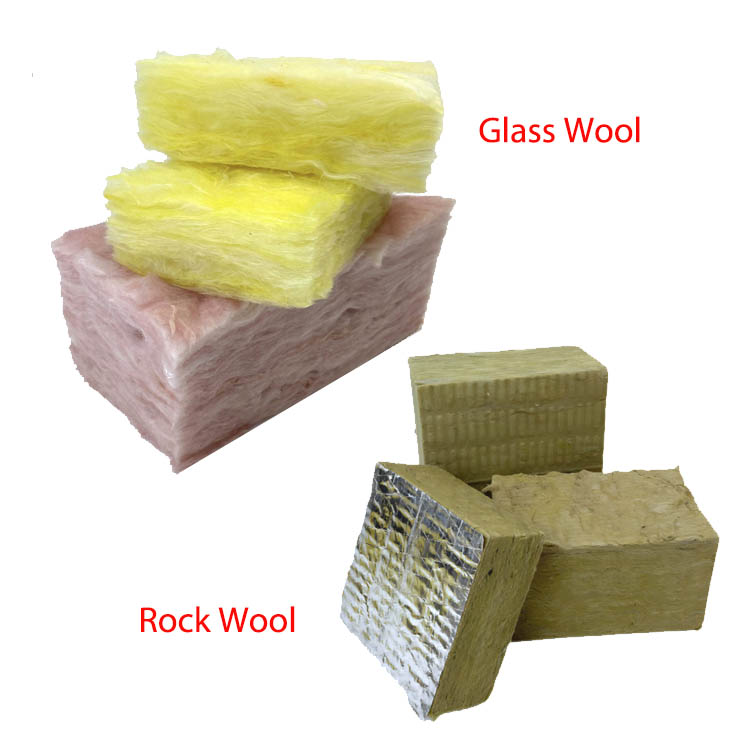
Proper installation is critical for both mineral wool and fiberglass insulation to achieve rated thermal and acoustic performance. Regardless of which material you choose, the following best practices apply to all commercial and industrial insulation projects.
Personal Protective Equipment (PPE)
Both mineral wool and fiberglass are man-made vitreous fibers (MMVF) and require appropriate PPE during handling and installation. Workers should wear long-sleeved shirts and trousers, safety glasses or goggles, dust masks (at minimum N95 for glass wool, P100 for high-density mineral wool), and nitrile or rubber gloves. All fibers are classified as non-carcinogenic by the International Agency for Research on Cancer (IARC) at current workplace exposure levels, but good industrial hygiene practices should always be followed.
Cutting and Fitting
Fiberglass batts and blankets can be cut with a sharp utility knife using a straight edge. The material compresses easily, so cutting slightly oversized and letting it expand into the cavity ensures a snug fit with no gaps. Mineral wool boards and slabs are denser and benefit from a serrated bread knife or a purpose-made insulation saw for clean cuts. Pipe sections in both materials are scored and snapped or cut with a hacksaw. All cut edges should be butted tightly and secured with appropriate adhesive, wire, or bands per the system manufacturer’s specifications.
Vapor Barriers and Jacketing
Mechanical pipe insulation in both materials is frequently jacketed with aluminum, stainless steel, or PVC jacketing to protect against mechanical damage, moisture ingress, and UV degradation. For outdoor applications, aluminum jacketing with integral moisture barrier is standard. Indoor ductwork insulation may use factory-applied all-service jacket (ASJ) facing on fiberglass, while mineral wool duct boards may use aluminum foil facing. Correct lapping and sealing of all jacket seams is essential to maintain system integrity over the installation’s service life.
Expansion Joints and Anchoring
For high-temperature mineral wool systems above 200°C, expansion joints must be incorporated at regular intervals (typically every 3–4 metres) to accommodate thermal movement. Wire mesh or banding at 300mm centres is used to secure the insulation on horizontal pipes. Vertical pipe runs require support rings at every floor penetration and at intervals not exceeding 3 metres to prevent sagging. These details are usually specified by the insulation system designer and must be followed carefully to prevent premature failure of the insulation system.
Quality Control and Inspection
Third-party inspection during installation is common on large commercial and industrial projects. Inspectors verify that the correct product, thickness, and density have been installed, that all joints are sealed, jacketing is correctly lapped and fastened, and that no damage to the insulation has occurred during installation. EcoIn provides full material test certificates, product data sheets, and compliance documentation for all mineral wool and fiberglass products to support quality control programs on site.
Certifications and Standards for Insulation Products
When specifying insulation materials for a project, it is important to verify that products carry the relevant third-party certifications for your region and application. Key standards include:
For thermal insulation products: EN 13162 (mineral wool) and EN 13162/EN 13163 (fiberglass) in Europe; ASTM C547, C553, C592, and C612 in North America; GB/T 11835 and GB/T 17393 in China.
For fire performance: EN 13501-1 (Euroclass A1 for non-combustible) in Europe; UL 723 and ASTM E84 (surface burning characteristics) in North America.
For acoustic performance: ISO 354 (absorption coefficient) and ISO 10534-2 (normal incidence absorption) are commonly referenced.
EcoIn’s manufacturing facilities hold ISO 9001:2015 quality management certification and produce products tested to applicable EN, ASTM, and GB standards. All export shipments are accompanied by a Certificate of Conformance, Packing List, and full product test reports as standard documentation.