Commercial building insulation is a critical investment for improving energy efficiency, reducing heating and cooling costs, and creating a comfortable indoor environment for employees and customers. Without proper commercial building insulation, a structure can lose 25–30% of its climate-control energy through walls, roofs, and floors. In this guide, we cover everything you need to know — from material selection to installation methods and compliance requirements.
Why Commercial Building Insulation Matters
Effective commercial building insulation creates a controlled thermal envelope that reduces mechanical system loads, stabilises interior temperatures, controls condensation, and improves occupant comfort year-round. Energy codes in most countries now mandate minimum R-values for walls, roofs, and foundations — making compliance a baseline requirement, not just a best practice.
From an economic perspective, quality commercial building insulation typically pays back its installation cost within 3–7 years through reduced energy bills. For a 10,000 m² facility in a temperate climate, upgrading from minimal to high-performance insulation can save $30,000–$80,000 per year in HVAC operating costs — making it one of the highest-ROI investments a property owner or developer can make. Well-insulated facilities also command higher lease rates, longer tenant retention, and improved asset valuations compared to poorly insulated buildings of similar size and location.
Commercial Building Insulation Materials
The first step in any insulation project is choosing the right material. There are several options, each with distinct thermal, acoustic, fire, and moisture-resistance properties. Here are the most common materials used in commercial construction:
- Fiberglass Insulation
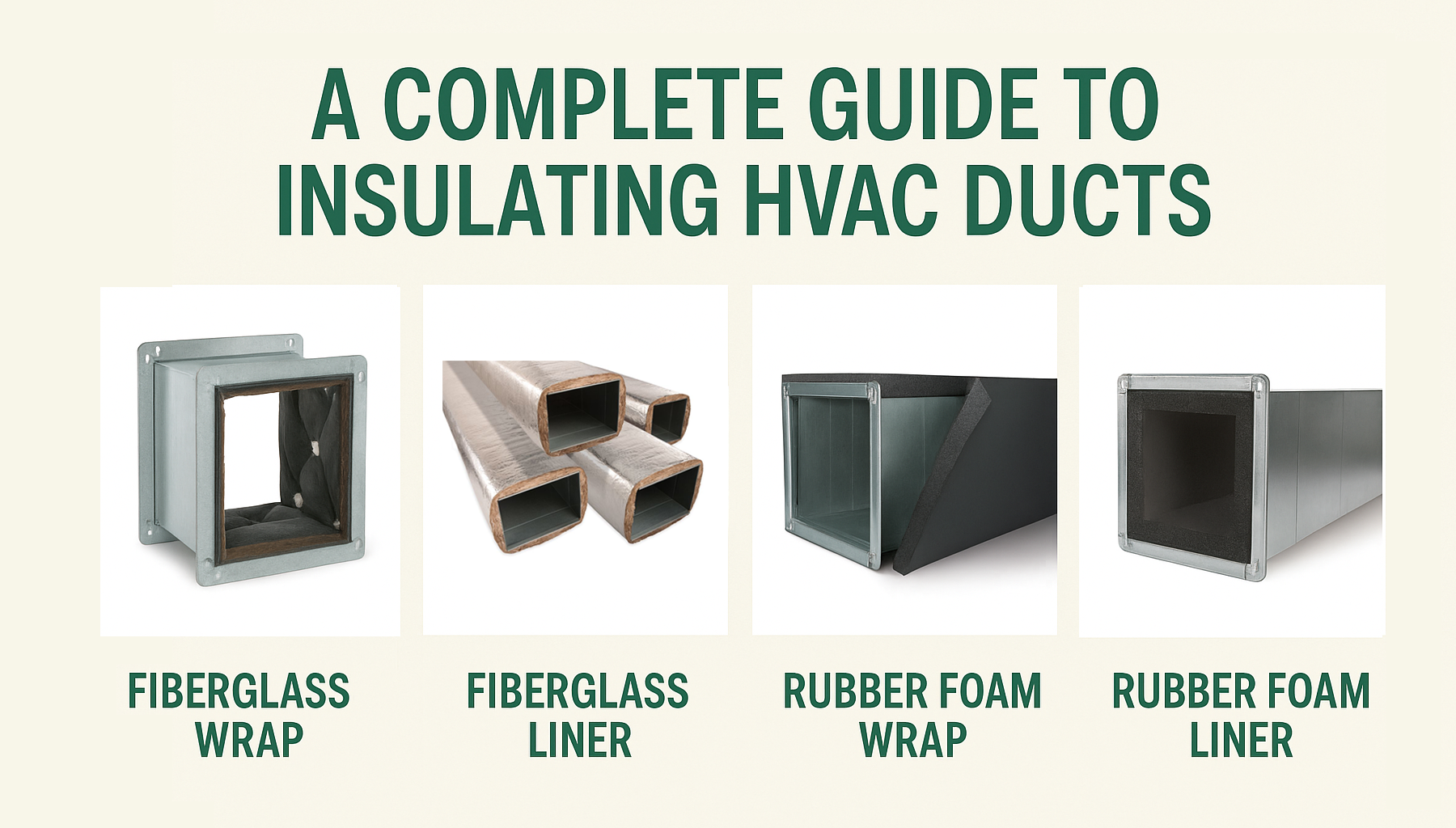
Fiberglass is made of fine glass fibers and is one of the most widely used insulation materials widely used worldwide. It is relatively inexpensive, easy to install, and comes in rolls or batts for walls, floors, and ceilings. Fiberglass batts are non-combustible and do not absorb moisture.
- Mineral Wool Insulation
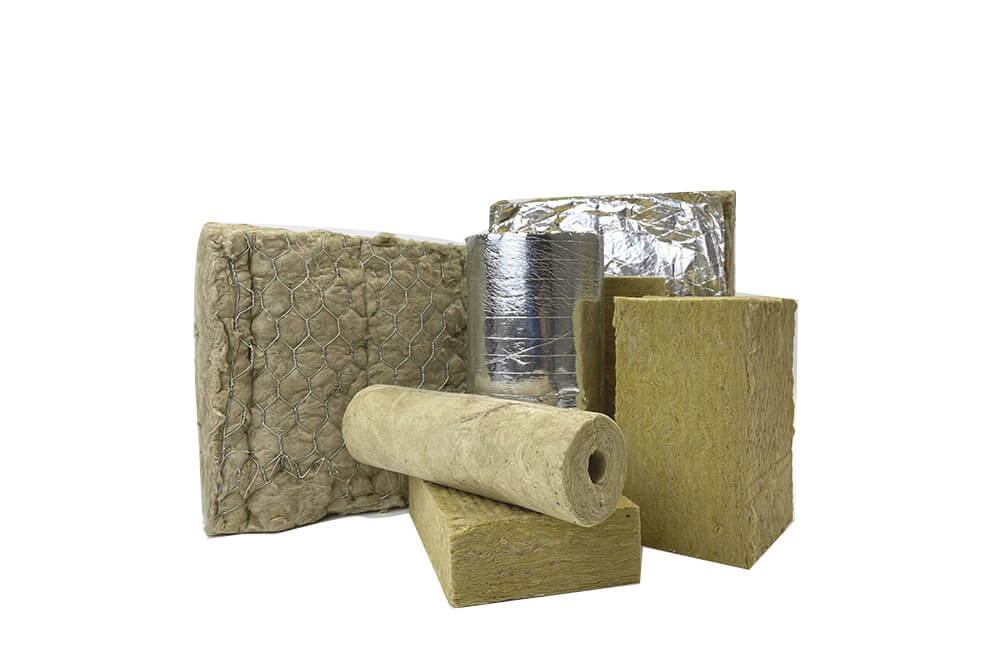
Mineral wool (also called rock wool or stone wool) is produced from natural basalt or recycled industrial slag. It offers excellent fire resistance, acoustic performance, and moisture control — making it a preferred material for insulation in industrial plants, high-rise towers, and fire-rated assemblies. Learn more on Wikipedia, or explore EcoIn mineral wool products for your next project.
- Spray Foam Insulation
Spray polyurethane foam expands to fill gaps and cracks, creating an airtight seal. Open-cell foam suits interior applications, while closed-cell foam — with its higher R-value per inch and water resistance — is preferred for roofs and below-grade walls in commercial building insulation projects.
- Rigid Foam Boards
Rigid foam boards (XPS, EPS, or Polyiso) offer a high R-value per inch and are commonly used in continuous exterior insulation systems for commercial buildings. They resist moisture, do not compress under load, and are durable over decades. Polyisocyanurate boards provide the highest R-value of any rigid foam option.
- Reflective Insulation
Reflective insulation uses foil-faced materials to reflect radiant heat rather than resist conductive heat flow. It is particularly effective in warm and tropical climates and is often used in commercial roofs and wall cavities to reduce solar heat gain. An air gap between the foil and the facing surface is required for optimal performance.

How to Choose the Right Commercial Building Insulation
Selecting the right insulation system involves balancing technical and economic factors. The following criteria should guide material selection for any project:
- Climate Zone
Climate is the most important driver of commercial building insulation specification. Cold climates require high R-values (R-20+ for walls, R-30+ for roofs). Hot and humid climates benefit from reflective or closed-cell foam solutions that also control moisture. Mixed climates often require a combination of rigid exterior boards and cavity batts.
- Structural System
The building’s framing determines where insulation can be installed and whether thermal bridging is a concern. Steel-frame commercial buildings lose significantly more heat through the frame than timber-frame structures and therefore benefit most from continuous continuous exterior insulation to eliminate thermal bridging.
- Fire Rating Requirements
Commercial buildings are subject to strict fire codes that govern which insulation materials are permitted in each application. Mineral wool and fiberglass are non-combustible (Class A). Spray foam and rigid foam boards typically require a gypsum board cover or intumescent coating when used in occupied spaces.
- Acoustic Performance
In offices, hotels, healthcare facilities, and multi-tenancy buildings, acoustic control matters as much as thermal performance. Mineral wool delivers the highest sound attenuation of any insulation material and is the preferred choice for party walls, floor assemblies, and ceiling plenums where noise control is critical.
- Lifecycle Cost
Fiberglass offers the lowest upfront cost, while mineral wool and spray foam deliver higher performance at greater initial investment. A 20–30 year lifecycle cost analysis almost always favours higher-performance commercial building insulation due to compounding energy savings and lower maintenance costs.
Commercial Building Insulation Installation Techniques
Installation quality determines how well commercial building insulation performs in practice. Poor installation — leaving gaps or compressing batts — can reduce effective R-value by 30–50% compared to rated values. The four main techniques used in commercial construction are:
- Blanket (Batt) Insulation
Fiberglass or mineral wool batts — the most common commercial building insulation materials — are cut to fit between studs, joists, and rafters. This is the most widely used commercial building insulation installation method — fast, cost-effective, and suitable for most standard framing configurations. Batts must be installed at full thickness and without compression.
- Blown-in (Loose-fill) Insulation
A machine pneumatically blows loose insulation material into closed wall cavities, attics, or hard-to-reach spaces. Blown-in loose-fill is the standard method for retrofitting commercial building insulation and achieves excellent coverage around pipes, conduit, and irregular framing where batts cannot conform.
- Spray Foam Application
Two-component spray foam is applied by trained contractors using heated hoses and specialised spray guns. It creates a seamless, fully adhered insulation layer that combines air barrier, vapour control, and thermal resistance in a single material — ideal for roofs, crawl spaces, and complex geometries.
- Continuous Exterior Insulation
Rigid foam boards are mechanically fastened to the structural sheathing before cladding is installed. This eliminates thermal bridging through the structural frame — a major source of heat loss in steel-frame commercial buildings — and is now required by energy codes in many jurisdictions.
Standards and Codes for Commercial Building Insulation
Specifying the correct commercial building insulation means meeting or exceeding the energy codes and fire standards that apply to your project. In the United States, ASHRAE 90.1 sets prescriptive R-values for walls, roofs, and below-grade assemblies by climate zone — the most commonly referenced energy standard for commercial construction. ASTM C518 is used to measure thermal resistance (R-value), while ASTM E84 tests flame spread and smoke development to determine fire classification.
In Europe, EN 13162–EN 13172 cover factory-made mineral wool and glass wool commercial building insulation products. The Energy Performance of Buildings Directive (EPBD) mandates minimum thermal performance for new commercial buildings and major renovations across EU member states. For projects in China, GB 50189 governs energy consumption in public buildings and prescribes minimum commercial building insulation thicknesses by climate region.
Understanding which standards apply to your project region avoids costly specification errors and delays during building permit review. Engaging an insulation manufacturer or distributor with proven experience in cross-border projects — such as EcoIn Group — ensures that product certifications are correctly matched to the applicable standard in your country from the outset.
Mineral wool and fiberglass commercial building insulation products are classified as non-combustible (Euroclass A1 or ASTM Class A) and comply with the strictest fire codes without additional treatment. Foam-based products — including spray foam and rigid boards — typically require a fire-resistant cover layer in occupied commercial spaces.
For sustainable building certifications, specifying commercial building insulation that exceeds minimum code R-values earns credits under LEED (Energy and Atmosphere), BREEAM (Energy), and Green Star (Energy). These certifications increasingly influence tenant decisions and property valuations, making high-performance insulation a business case as well as a technical one.
EcoIn supplies certified glass wool and mineral wool products that comply with ASTM, EN, and GB standards for commercial building insulation worldwide. Our technical team can provide thermal calculations, product data sheets, and compliance documentation to support design, procurement, and building permit applications.