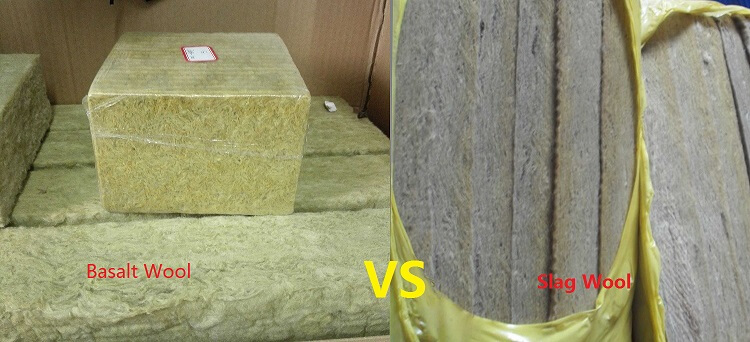
Basalt Rockwool vs Slag basalt rockwool: What You Need to Know
Basalt rockwool is a premium insulation material made from natural volcanic basalt rock, offering significantly higher acidity coefficients and longer service life than slag-based basalt rockwool. Understanding the difference between basalt rockwool and slag basalt rockwool is essential for specifying the right insulation for industrial, commercial, or construction applications.
Even though there are more than 200 domestic rock mineral wool manufacturers in China, but most of them using slag as main raw material, which has alkaline substances such as calcium oxide and magnesium oxide at a high level, acidity coefficient is below 1.5. Those slag wool is aging intolerant, can not meet the technical requirements of Chinese national standard, not to mention ASTM standard.
Only rock wool with an acidity coefficient of 1.6 or more is real rock wool product, and the standard is even higher for exterior wall insulation, which requires acidity coefficient over 1.7, so as to guarantee the quality and thermal performance.
There are less and less domestic companies went to in-depth research on the application technology of rock wool in buildings due to high product quality and relatively small market demand in China.
EcoIn Insulation factory focus on markets abroad, we strictly control the source of raw materials and conducts inspections on each batch of raw materials to ensure that the acidity coefficient of raw materials is above 1.8.
Below is the difference between basalt rock wool and slag wool in four aspects:

1. Comparison of chemical composition and acidity coefficient
| Raw Material | SiO2 | Al2O3 | CaO | MgO | Fe2O3 | FeO | SiO2+Al2O3+CaO+ MgO+ | MK |
| Basalt | 47.41 | 15.0 | 8.02 | 6.89 | 3.99 | 7.36 | 77.32 | 4.18 |
| Dolerite | 49.32 | 16.61 | 9.40 | 6.56 | 6.0 | 4.65 | 81.89 | 4.13 |
| Cast iron blast furnace slag | 40~41 | 8~17 | 36~42 | 6~8 | — | 0.65 | 90~95 | 0.95 |
| Steelmaking blast furnace slag | 38~40 | 6~12 | 38~43 | 5~12 | — | 0.4~0.8 | 90~95 | 0.9 |
Analysis: The chemical composition of blast furnace slag is that SiO2+Al2O3+CaO+MgO content is as high as 90% to 95%, and Fe2O3+ FeO content is less than 1%, while that of basalt and dolerite is SiO2+Al2O3+CaO+MgO content 77% to 83%.
This is more than 10% lower than that of blast furnace slag, which significantly impacts the acidity coefficient and durability of the final basalt rockwool product. The content of Fe2O3+ FeO is about 11% on average and it can reach 17% at the highest. From this, the acidity coefficient MK of the basalt rock wool board is calculated to be 1.5 or even more than 2.0, and the acidity coefficient MK of the slag rock wool board is about 1.2.
2 The difference in water resistance between basalt rock wool board and slag rock wool board
The crystallization zone of basalt rock wool board is CS-C2AS-C2S (wollastonite-aluminum beryl-calcium feldspar). All of them have no hydraulic characteristics, and the changes are very small after water exposure, making the basalt rock wool board have good water resistance.
The crystallization zone of the slag rockwool board is CS-C2AS-CAS2 (wollastonite-aluminum cristobalite-dicalcium silicate), and the dicalcium silicate produces hydration reaction with water in the course of its production with increasing temperature, so that the stability of slag wool fibers decreasing in a humid environment;
Basalt rock wool board’s PH value is less than 4, which belongs to mineral fiber with particularly stable water resistance. Slag wool is generally more than 5, even more than 6, and its water resistance can only be moderately stable or unstable.
3 The comparition in thermal conductivity performance
Both basalt wool board and slag rock wool board have good thermal insulation performance. When the working temperature exceeds 675°C, the cooling process of slag wool will be slow, which causes the internal structural conversion density to decrease from 3.28 to 2.97, and the volume expands by about 10%, making the slag rock wool board powdered and disintegrated, but basalt rock wool board does not have this conversion, the use of temperature is up to 760 °C above, the softening temperature is 900 ~ 1000 °C.
4 The difference of corrosion resistance
One of the main functions of the blast furnace is desulfurization to prevent iron brittleness in the process of use. These removed sulfur remain in the form of CaS in the blast furnace slag and then enter the slag wool. The content is about 5%. When the slag rock wool board is used in a high-humidity environment, the CaS will decompose into Ca(OH)2 and H2S. Ca(OH)2 makes the water alkaline and further reduces the water resistance of the slag cotton.
This is why rock wool with high MK value is preferred for high-humidity environments. H2S gas can be dissolved in water to produce hydrosulfuric acid, which will cause corrosion when it comes into contact with metal.
The basalt rockwool board uses basalt or diabase as a raw material, there is no sulfur source, so no corrosion will occur.
FAQ: Basalt Rockwool vs Slag Mineral Wool
Is basalt rockwool the same as mineral wool?
Rock wool is a broad term for mineral fiber insulation. The term covers both high-acidity basalt-based wool (MK ≥ 1.6) and lower-acidity slag-based wool (MK ~1.2). Only fiber with MK above 1.6 meets the technical requirements of Chinese national standards, and MK above 1.7 is required for exterior wall insulation under ASTM criteria.
What acidity coefficient should rock wool have?
For general industrial insulation, the acidity coefficient (MK) should be at least 1.6. For exterior wall systems, the minimum is 1.7 MK. EcoIn controls all raw materials above 1.8 MK per batch to ensure compliance with international standards.
Can slag mineral wool be used outdoors?
Slag wool with MK below 1.5 is not recommended for outdoor or high-humidity environments. Its pH is typically 5–6 (moderately stable) or above 6 (unstable). In contrast, basalt rockwool maintains a pH below 4, classifying it as particularly stable for exterior and industrial applications.
What is the maximum service temperature for rock wool?
High-MK rock wool can be used continuously up to 760°C, with a softening point of 900–1000°C. Slag-based wool begins structural conversion at 675°C, causing ~10% volume expansion and disintegration. For furnaces, high-temperature pipelines, and fire barriers, specify MK ≥ 1.6 mineral fiber.
How can I verify the quality of rock wool insulation?
Request the material test report showing MK value and chemical composition. A simple field test: soak fibers in water for 24 hours — stable fiber maintains integrity while low-MK slag fiber disintegrates. Always require third-party batch certifications from your supplier.
What industries use rock wool insulation?
Rock wool is used in industrial pipe insulation for petrochemical plants, LNG facilities, power generation, and marine applications. In construction, it serves as exterior wall insulation, roof insulation, and fire barriers. Its thermal conductivity of 0.033–0.044 W/m·K and fire resistance make it suitable for projects requiring ASTM, EN, and GB standard compliance.
Conclusion: Choosing Between Basalt Rockwool and Slag Mineral Wool
The four comparisons above show that basalt rockwool consistently outperforms slag mineral wool in chemical stability, fire resistance, long-term durability, and thermal performance. For exterior wall insulation, ASTM-compliant projects, and high-temperature industrial applications, specifying MK ≥ 1.6 rock fiber is the correct approach.
When selecting rock wool for industrial or construction projects, verify the acidity coefficient exceeds 1.6. EcoIn strictly controls raw material acidity coefficient above 1.8 in every batch of glass wool and mineral wool products. Learn more about mineral wool on Wikipedia.
Frequently Asked Questions About Basalt Rockwool vs Slag Mineral Wool
Is basalt rockwool better than slag mineral wool for high-temperature applications?
Yes. Basalt rockwool outperforms slag mineral wool in high-temperature environments because it is made from volcanic basalt rock, giving it a higher melting point (typically above 1000°C) and better thermal stability. Slag mineral wool, derived from blast furnace slag, generally has a lower operating temperature range.
Which is more fire resistant — basalt rockwool or slag mineral wool?
Basalt rockwool offers superior fire resistance compared to slag mineral wool. Because basalt rock is naturally non-combustible, basalt rockwool products achieve higher fire ratings and are preferred in passive fire protection applications, industrial pipe insulation, and commercial HVAC systems.
How do I know if my insulation is basalt rockwool or slag mineral wool?
Basalt rockwool typically has a darker, more uniform grey color and higher density compared to slag mineral wool. Check the product datasheet for the raw material source — products stating “basalt” or “volcanic rock” as the primary raw material are basalt rockwool. For certified product selection, contact EcoIn’s insulation specialists.
Basalt Rockwool vs Slag Wool: Practical Selection Guide
Selecting between basalt rockwool and slag mineral wool depends on three key project criteria: operating temperature range, budget, and longevity requirements. For projects requiring insulation above 600°C, basalt rockwool is the only viable option due to its superior acidity coefficient and high-temperature stability. For standard commercial construction with moderate budgets, slag mineral wool may be acceptable for non-critical, low-temperature applications.
EcoIn recommends basalt rockwool for the following industrial scenarios: pipe insulation in chemical plants, boiler casing insulation, exhaust system insulation, and high-temperature furnace lining. In each case, the high acidity coefficient (MK ≥ 1.8) and low slag content of basalt rockwool ensures longer service life and reduced maintenance costs compared to slag-based alternatives.
For procurement professionals sourcing basalt rockwool from Chinese manufacturers, verify the following specifications: MK value ≥ 1.6, operating temperature rating ≥ 700°C, fiber diameter ≤ 6 microns, and compliance with ASTM C612 or ISO standards. EcoIn Group maintains full traceability from raw basalt rock to finished insulation product, with third-party test reports available for every shipment of basalt rockwool and slag-free mineral wool products.
Understanding the difference between basalt rockwool and slag mineral wool is essential for specifying the correct insulation material in LEED-certified buildings, offshore platforms, and critical industrial facilities. Contact EcoIn’s technical team for product selection guidance and project-specific basalt rockwool recommendations.