


The aluminum ingot price has surged to multi-year highs following U.S. sanctions against Rusal, one of the world’s largest aluminum producers. With supply disruptions intensifying and downstream demand remaining robust, prices are forecast to reach up to RMB 16,000 per ton in June — a significant jump from recent levels.
Aluminum Ingot Price: Current Market Overview
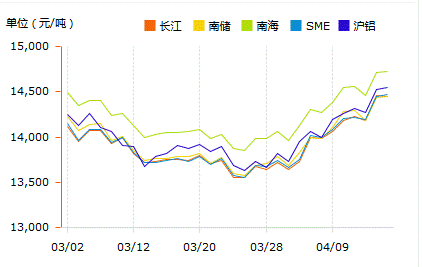
Global trade sentiment has stabilized this week as tensions between the Middle East and major trading partners have eased somewhat, and friction between China and the United States has cooled. Despite this calmer backdrop, the impact of U.S. sanctions on Rusal continues to drive the aluminum market. LME aluminum hit a new multi-year high, and Shanghai Aluminum has continued its upward trend as buyers scramble to secure supply from alternative producers.
The average aluminum ingot price on the China Nonferrous Metals Industry Association (CNAL) reached RMB 14,460 per ton — an increase of RMB 480 from the previous week, representing a weekly gain of 3.43%.
What Is Aluminum Ingot and How Is It Priced?
Before examining the market dynamics, it helps to understand what aluminum ingot is and how its price is determined. Aluminum ingot is the primary form of refined aluminum produced by smelters after processing bauxite ore. These ingots serve as the raw material for rolling mills, extruders, and foundries that manufacture finished aluminum products such as sheet, coil, foil, and extrusions.
The aluminum ingot price is benchmarked internationally on the London Metal Exchange (LME), which sets a globally recognized spot price and forward pricing structure. In China, the Shanghai Futures Exchange (SHFE) operates as the primary domestic price reference, while the CNAL publishes weighted average prices across major trading hubs including Shanghai, Wuxi, Hangzhou, Guangzhou, and Tianjin.
Several factors determine where the aluminum ingot price settles at any given time:
- Production costs — electricity accounts for approximately 30–40% of aluminum smelting costs, so power prices heavily influence ingot pricing.
- Global supply capacity — operating rates at smelters worldwide, particularly in China, which accounts for over 55% of global aluminum production.
- Downstream demand — from construction, automotive, aerospace, packaging, and industrial sectors.
- Currency movements — as a dollar-denominated commodity, exchange rate fluctuations affect prices in local currencies.
- Geopolitical events — sanctions, trade disputes, and tariffs can rapidly disrupt supply chains, as seen with Rusal.
Impact of Rusal Sanctions on the Aluminum Ingot Price
The U.S. Treasury’s Office of Foreign Assets Control (OFAC) imposed sanctions on Rusal in April 2018, sending immediate shockwaves through the global aluminum market. Rusal is one of the world’s largest aluminum producers with an annual output of approximately 3.7 million tonnes — representing about 6% of total global aluminum production.
The sanctions effectively froze Rusal out of U.S. dollar transactions and cut the company off from international banking systems. Major global customers, including many European and Asian buyers, faced a difficult choice: find alternative suppliers or risk secondary sanctions for continuing to do business with Rusal. The resulting scramble for alternative supply drove the aluminum ingot price sharply higher within days of the announcement.
The immediate market impact was severe. LME aluminum prices jumped more than 11% in a single day following the sanctions announcement — one of the largest single-day moves in the history of the aluminum market. The aluminum ingot price on the CNAL rose correspondingly, as Chinese buyers and traders adjusted their pricing expectations in line with the tighter global supply outlook.
Demand Factors Pushing Aluminum Prices Higher
On the demand side, Q2 activity has been significantly stronger than Q1. The United States is the primary importer of electrolytic aluminum, and with Rusal sanctions reducing available supply, buyers are competing aggressively for alternative sources. This supply-demand imbalance is the key structural driver pushing ingot values to new highs.
Strong construction activity, manufacturing expansion, and steady demand from the transportation sector have all contributed to elevated consumption of primary aluminum. Downstream products including aluminum jacketing for industrial pipe and equipment insulation are also seeing increased orders, adding further pressure to raw material costs.
The automotive industry’s continued shift toward aluminum-intensive vehicle designs — to meet fuel economy and emissions targets — represents another durable demand driver. Modern vehicles use an average of 200 kg of aluminum, a figure that has grown steadily as automakers replace heavier steel components with lighter aluminum alternatives.
In the construction sector, aluminum curtain wall systems, roofing sheets, and structural profiles continue to see strong demand globally. Urbanization trends in Southeast Asia, India, and the Middle East are adding millions of square meters of commercial and residential floor space annually, much of it requiring aluminum cladding and structural components.
Supply Constraints Keeping Ingot Prices Elevated
From the supply side, operating production capacity remains constrained below normal levels. Supply increases have been consistently below market expectations. The domestic electrolytic aluminum price has hovered near RMB 14,000 per ton — close to the production cost floor — which limits the incentive to rapidly restart idled capacity.
Winter production cuts reduced output substantially, and the anticipated recovery of electrolytic aluminum smelters has been slower than forecast. Environmental compliance requirements and energy cost pressures have further delayed capacity restarts. China’s government-mandated closure of illegal or non-compliant smelters, which began as part of the supply-side reform policy in 2017, removed approximately 3–4 million tonnes of annual capacity from the market.
These supply-side constraints, combined with the ongoing geopolitical sanctions impact, create sustained upward pressure on the market. Even if some idled capacity resumes operation in Q3, analysts expect the market to remain in deficit through at least the end of the year.
How the Aluminum Ingot Price Affects Downstream Products
The aluminum ingot price is the foundational input cost for a broad range of finished products. Understanding its movements is essential for buyers and manufacturers across multiple industries.
In the industrial insulation sector, the aluminum ingot price directly determines the cost of aluminum sheet and coil, which are then fabricated into aluminum jacketing for pipe insulation systems. Aluminum jacketing — the metal cladding applied over insulation on hot and cold process pipes, vessels, and equipment — is priced as a function of both ingot cost and the conversion premium charged by rolling mills.
When the aluminum ingot price rises sharply, rolling mills typically pass through the cost increase within 4–8 weeks, reflecting the lag between raw material procurement and finished product delivery. This means insulation contractors and project procurement teams should anticipate higher jacketing costs for projects scheduled for delivery in Q3 and Q4.
Other downstream aluminum products affected by ingot pricing include:
- Aluminum extrusions — window frames, structural profiles, and heat sink components.
- Aluminum foil — food packaging, pharmaceutical blister packs, and HVAC duct liner facings such as ASJ (All Service Jacket).
- Aluminum die castings — automotive components, electronics housings, and industrial fittings.
- Aluminum sheet and plate — marine, aerospace, construction, and chemical process applications.
- Aluminum wire and cable — electrical distribution networks and overhead transmission lines.
Price Outlook and Procurement Strategy
Based on current market fundamentals — tight supply, robust demand, and the ongoing ripple effects of Rusal sanctions — the aluminum ingot price is predicted to reach a peak of RMB 16,000 per ton in June. Manufacturers and procurement teams sourcing aluminum-based materials should factor this elevated pricing into their cost planning and purchasing strategies for Q2 and Q3.
For buyers of aluminum cladding and jacketing products, monitoring aluminum pricing trends closely is essential for accurate project budgeting. EcoIn Group provides competitive pricing on aluminum jacketing and related insulation accessories, with supply flexibility designed to help clients manage material cost volatility.
Key factors to monitor in the coming weeks that could influence whether the aluminum ingot price reaches the RMB 16,000 forecast or retreats:
- Any developments in the Rusal sanctions — extension, modification, or relief could significantly move prices in either direction.
- China’s electricity pricing policies and their impact on domestic smelting operating costs.
- Escalation or de-escalation of the U.S.-China trade dispute, which affects both demand and market sentiment.
- LME inventory levels — falling warehouse stocks typically support higher spot prices.
- Seasonal construction demand patterns in China, the United States, and Europe entering the peak summer building season.
FAQ: Aluminum Ingot Price
Understanding LME Aluminum Pricing Mechanics
For buyers and procurement professionals, understanding how the LME aluminum price translates into the actual aluminum ingot price paid at the mill or warehouse level is essential. The LME sets a cash price for 99.7% purity primary aluminum, but the price you pay for physical aluminum ingot includes several additional components:
- LME cash price — the internationally benchmarked base price, quoted in USD per tonne.
- Regional premium — a markup over LME reflecting regional supply-demand balance, logistics costs, and financing. In Q2 2018, Midwest U.S. premiums surged on the Rusal sanctions news, reaching multi-year highs above 20 cents per pound.
- Alloy premium — additional charges for specific aluminum alloy grades, particularly those outside the standard P1020 grade.
- Conversion premium — the cost added by rolling mills or extruders when converting ingot into sheet, coil, extrusion billet, or other semi-finished products.
When the aluminum ingot price rises sharply as it has following Rusal sanctions, the impact compounds across all these components. Regional premiums spike as buyers scramble to secure alternative supply. Conversion premiums rise as rolling mills and extruders pass through their higher raw material costs. The net effect is that the price increase at the finished product level often exceeds the percentage increase in the LME headline price.
Historical Context: Major Aluminum Price Events
The 2018 Rusal sanctions-driven spike in the aluminum ingot price is not the first time geopolitical events have caused dramatic price movements in the aluminum market. Understanding this historical context helps buyers develop more robust procurement strategies.
In 2008, aluminum prices peaked near $3,300 per tonne on the LME before collapsing during the global financial crisis to below $1,300 per tonne — a decline of more than 60% in less than six months. The crash eliminated the profit margins of many high-cost smelters, particularly in China, and triggered a wave of production cuts.
Between 2009 and 2011, the aluminum ingot price recovered strongly as global economic stimulus packages drove demand recovery, particularly in China’s infrastructure and construction sectors. Prices briefly touched $2,700 per tonne before a prolonged period of weakness driven by persistent Chinese overcapacity.
From 2015 to 2017, the aluminum ingot price faced sustained downward pressure as Chinese production capacity expanded far beyond domestic demand, leading to record export volumes that depressed global prices. It was only the combination of Chinese supply-side reforms (beginning late 2017), environmental inspections closing illegal capacity, and the Rusal sanctions in 2018 that finally broke the cycle of oversupply.
Risk Management Strategies for Aluminum Buyers
Given the volatility of the aluminum ingot price, buyers of aluminum-intensive products — including insulation jacketing, architectural cladding, and industrial fabrications — should consider structured risk management approaches:
Price indexing: Many long-term supply contracts include price adjustment clauses tied to LME averages over a specified period (monthly or quarterly average). This reduces both buyer and seller exposure to short-term spikes while maintaining a fair pricing relationship.
Forward purchasing: During periods of anticipated price increases, buyers with storage capacity may choose to accelerate purchases to lock in current pricing. This strategy is effective when the direction of price movement is clear — as it was following the Rusal sanctions announcement — but carries inventory carrying costs and price risk if forecasts prove incorrect.
Supplier diversification: Maintaining relationships with multiple aluminum suppliers in different regions reduces dependence on any single supply chain node that could be disrupted by sanctions, logistics problems, or production outages.
Escalation clauses: For project-based buyers planning months or years in advance, including aluminum price escalation provisions in construction contracts allows cost increases to be passed through to project owners, protecting fabricators and contractors from margin erosion.
EcoIn Group: Aluminum Jacketing Supply Solutions
EcoIn Group has supplied aluminum jacketing and insulation accessories to international customers across the Middle East, Southeast Asia, Europe, and North America for over a decade. Our manufacturing operations are vertically integrated, giving us direct control over quality and cost at the aluminum sheet production stage — a significant advantage in a volatile aluminum ingot price environment.
When the aluminum ingot price fluctuates, our established mill relationships and volume purchasing agreements allow us to buffer our customers from the most extreme short-term price movements. We provide transparent pricing with market-indexed updates, giving customers the visibility they need to manage project budgets effectively.
Our aluminum jacketing products are available in a full range of thicknesses (0.4mm to 1.2mm), widths, and alloy grades to meet ASTM and ISO specifications. Surface options include smooth, embossed (stucco), and corrugated profiles, with coating options including plain aluminum, polymer-film laminated, and polysurlyn moisture barrier facings for outdoor and high-humidity applications.
Summary: Key Takeaways on the Aluminum Ingot Price Outlook
The aluminum ingot price surge driven by Rusal sanctions represents a structural shift in the global aluminum market, not merely a temporary spike. With Rusal accounting for approximately 6% of global supply, any disruption to their operations — even partial — creates a supply gap that takes months or years to fill with alternative production capacity.
Buyers of aluminum products should anticipate continued elevated pricing through the remainder of the year. The combination of tight supply, robust demand across construction, transportation, and manufacturing sectors, and the lag time required to bring new smelting capacity online creates conditions favorable to sustained high prices. The aluminum ingot price forecast of RMB 16,000 per ton for June represents a realistic ceiling based on current fundamentals, but further geopolitical developments could push prices even higher in subsequent months.
For detailed pricing inquiries on aluminum jacketing, aluminum coil, and related insulation accessories, contact EcoIn Group’s sales team for a current market quotation.
