Comparison & Selection Guide: Fiberglass/Rubber Foam Duct Liner vs. Duct Wrap for HVAC Insulation
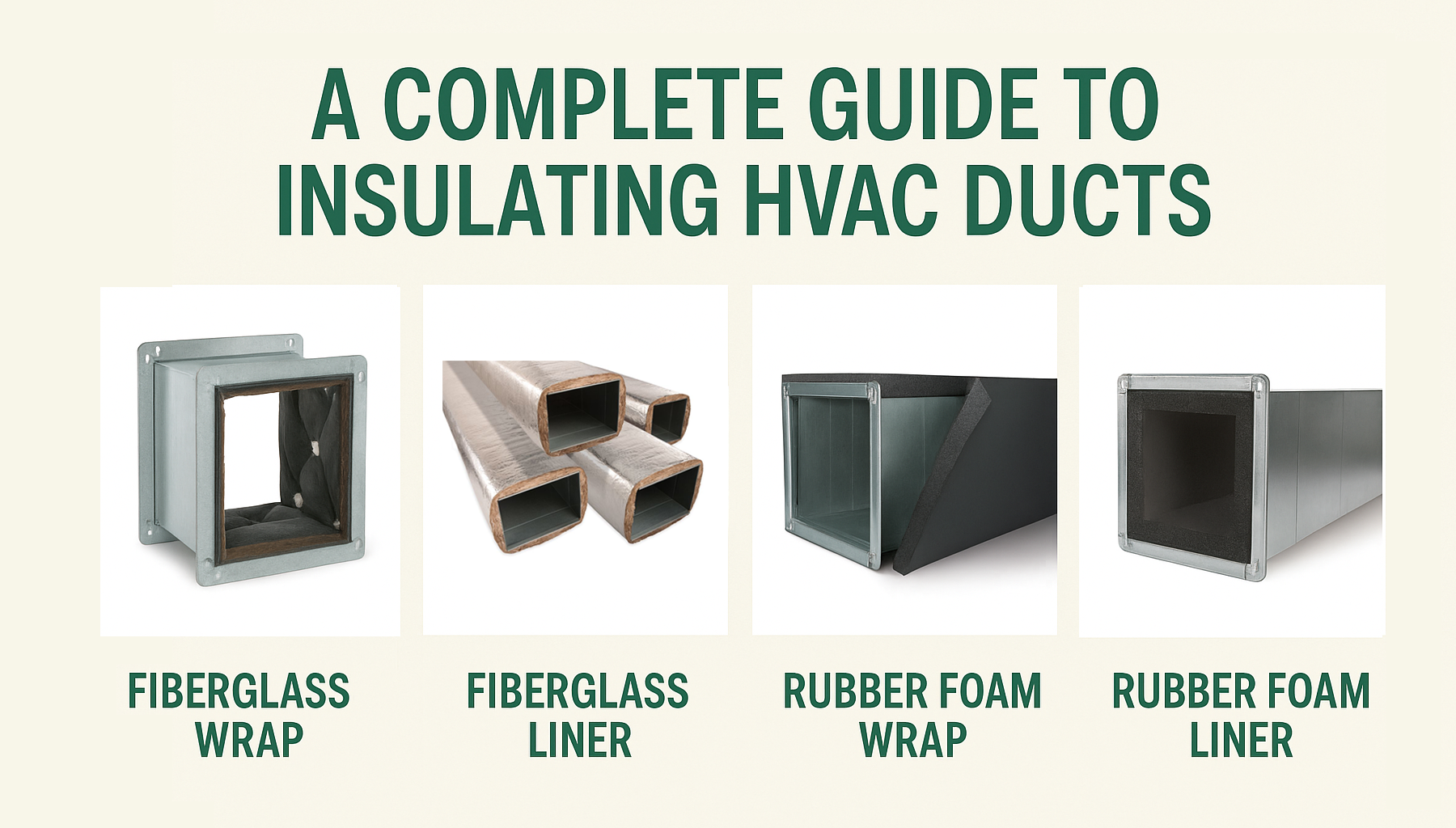
When comparing duct liner vs duct wrap for HVAC insulation, understanding their key differences helps engineers select the right product. The core difference between these four products lies in installation location and functional priorities. For HVAC systems, the key is to match the needs of thermal insulation, noise reduction, and environmental adaptability. Here’s a detailed comparison and selection guide:
I. Core Parameter Comparison of the Four Products
|
Feature |
Fiberglass Duct Liner |
Fiberglass Duct Wrap |
Rubber Foam Liner |
Rubber Foam Duct Wrap |
|
Installation Location |
Inside |
Outside |
Inside |
Outside |
|
Thermal Performance |
★★★★☆ |
★★★★★ |
★★★★☆ |
★★★★☆ |
|
Acoustic Performance |
★★★★★ (best) |
★★★☆☆ |
★★☆☆☆ |
★★☆☆☆ |
|
Moisture Resistance |
★★☆☆☆ |
★★★☆☆ |
★★★★★ |
★★★★★ |
|
Best For |
Sound control |
Cost-effective insulation |
Hygienic, moisture-resistant systems |
Condensation control |
|
Cost |
Low-medium |
Low |
Medium-high |
Medium-high |
1. Fiberglass Duct Liner
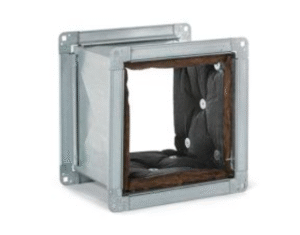
- Core Functions: 1. Sound absorption & noise reduction (core); 2. Condensation prevention on inner duct walls; 3. Basic thermal insulation.
- Material Characteristics: Fibrous, fluffy, and porous structure. High temperature resistance (up to 200℃+). Cost-effective.
- Suitable HVAC Scenarios: 1. HVAC ducts in equipment rooms, ceiling supply air ducts; 2. Ducts near bedrooms/offices; 3. Medium-to-high temperature ducts (e.g., exhaust ducts).
- Advantages: Optimal sound absorption effect. High temperature resistance. Low cost. Suitable for most general scenarios.
- Limitations: Average thermal insulation performance. Fibers tend to generate dust (requires sealing). Prone to sagging when damp (not for high-humidity environments).
2. Fiberglass Duct Wrap
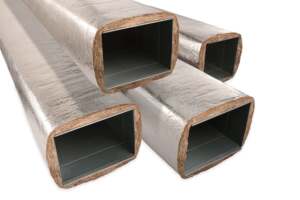
- Core Functions: 1. Basic thermal insulation; 2. Condensation prevention on outer duct walls; 3. Auxiliary sound absorption.
- Material Characteristics: Same as fiberglass material. Mostly with aluminum foil facing (moisture-proof and sealed).
- Suitable HVAC Scenarios: 1. Ordinary ventilation ducts, short-distance ducts; 2. Scenarios with low thermal insulation requirements but cost constraints; 3. External insulation for ducts in equipment rooms (auxiliary noise reduction).
- Advantages: Affordable. Easy to install. With slight sound absorption effect.
- Limitations: Lower thermal insulation efficiency than rubber foam. High moisture absorption. Prone to aging in long-term use (not for low-temperature/high-humidity HVAC systems).
3. Rubber Foam Liner
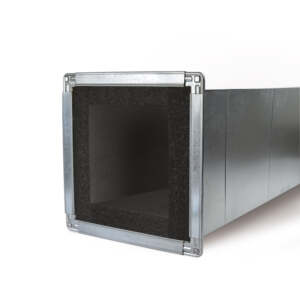
- Core Functions: 1. Condensation prevention (core); 2. Medium thermal insulation; 3. Mild sound absorption.
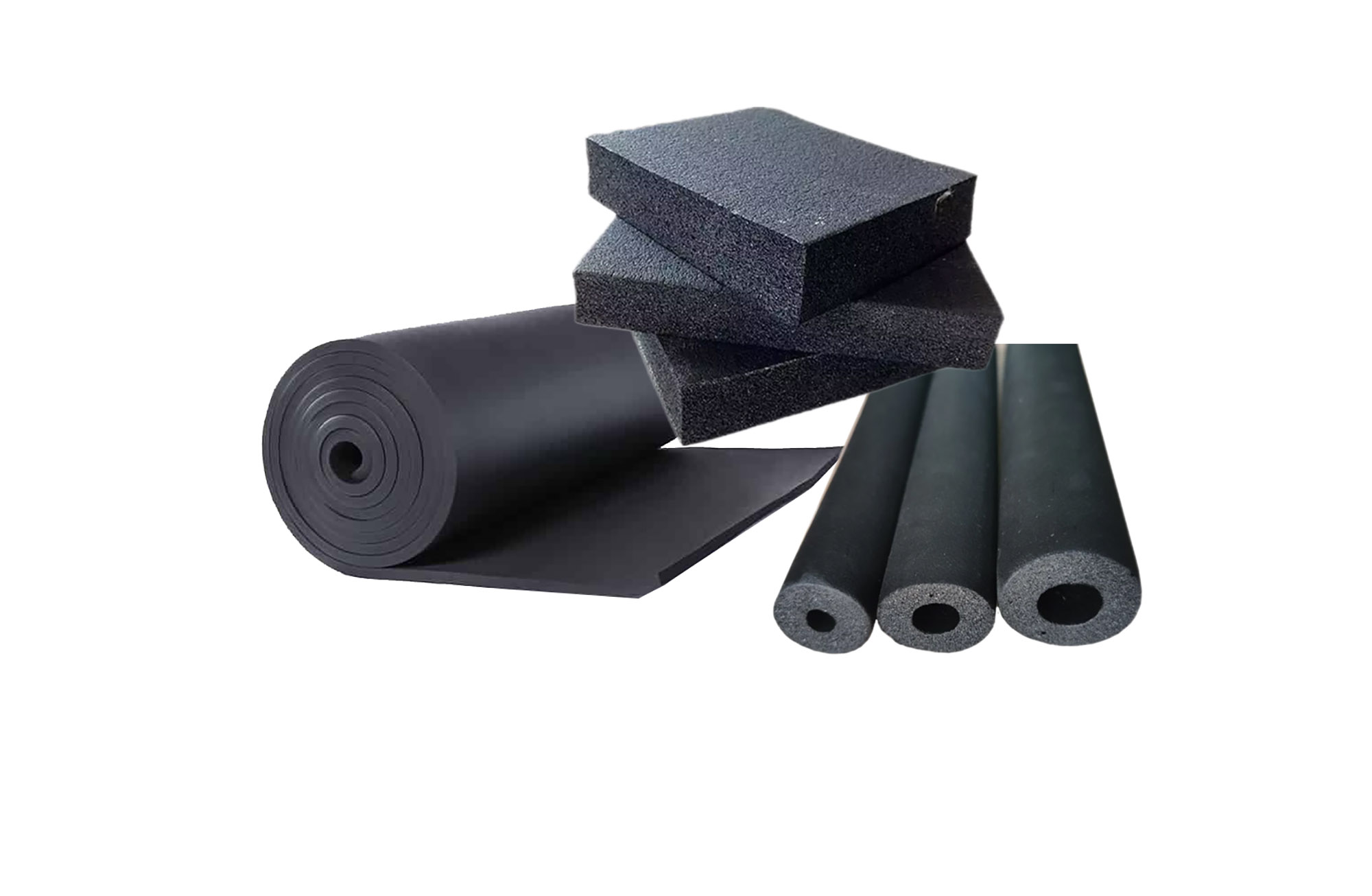
- Material Characteristics: Closed-cell foam structure. Flexible and waterproof. No fiber dust. Low temperature resistance (-40℃).
- Suitable HVAC Scenarios: 1. Inner walls of central air conditioning cold air ducts; 2. Ducts in clean environments (e.g., hospitals, laboratories); 3. Low-temperature supply air ducts (e.g., cold storage ventilation).
- Advantages: Strong waterproof and moisture-proof performance. No dust generation. Smooth inner wall after installation. Excellent condensation prevention.
- Limitations: Weaker sound absorption than fiberglass. Poor high-temperature resistance (generally ≤80℃). Higher price than fiberglass.
4. Rubber Foam Duct Wrap
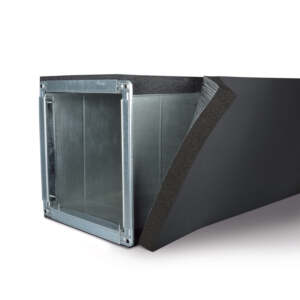
- Core Functions: 1. High-efficiency thermal insulation (core); 2. Condensation prevention on outer duct walls; 3. Waterproof sealing.
- Material Characteristics: Closed-cell structure. Low thermal conductivity. Aluminum foil facing for moisture resistance. Good flexibility.
- Suitable HVAC Scenarios: 1. Main central air conditioning ducts, long-distance hot/cold air ducts; 2. Outdoor ducts (resistant to wind and rain erosion); 3. Low-temperature/high-temperature difference ducts (e.g., refrigeration room ducts).
- Advantages: Optimal thermal insulation and energy-saving effect. Waterproof and moisture-proof. Anti-aging. Low maintenance cost.
- Limitations: Average sound absorption. High price. Not resistant to high temperatures (avoid use in high-temperature exhaust ducts).
II. HVAC System Selection Guide (By Scenario Priority)
1. First Determine Installation Location: Liner or Duct Wrap
- To solve airflow noise inside ducts (e.g., ducts passing through offices/bedrooms) → Choose liner (installed inside ducts) to directly absorb internal noise and prevent transmission to indoor spaces.
- To solve energy loss + condensation on outer duct walls (e.g., main central air conditioning ducts, outdoor ducts) → Choose duct wrap (wrapped outside ducts) to block heat exchange between inside and outside the ducts and protect the external environment of the ducts.
- High-end HVAC systems (e.g., hotels, hospitals) → Combined use: Liner for internal noise reduction + duct wrap for external thermal insulation to meet dual needs.
2. Then Select Material: Fiberglass or Rubber Foam
- Priority 1: Noise reduction > Thermal insulation → Choose fiberglass (either liner or wrap), as sound absorption is its core irreplaceable advantage.
- Priority 2: Thermal insulation > Noise reduction → Choose rubber foam (either liner or wrap), as its closed-cell structure offers 30%+ higher thermal insulation efficiency than fiberglass.
- Priority 3: Environmental Adaptability (critical)
- High-humidity environments (e.g., basement, swimming pool ducts) → Rubber foam (waterproof and moisture-proof; fiberglass easily fails when damp).
- Clean environments (e.g., hospitals, electronic factories) → Rubber foam (no fiber dust; fiberglass requires additional sealing).
- High-temperature ducts (e.g., exhaust ducts, boiler ventilation ducts) → Fiberglass (high-temperature resistant; rubber foam easily deforms above 80℃).
- Cost-sensitive scenarios (e.g., ordinary office buildings, factories) → Fiberglass (20%-40% lower price than rubber foam).
III. Practical Selection Examples (Quick Matching)
- Central air conditioning supply air ducts in office buildings (inside ceilings, near offices) → Fiberglass Duct Liner (internal noise reduction) + Fiberglass Duct Wrap (external basic thermal insulation) → Balance effect and cost.
- Ventilation ducts in hospital operating rooms → Rubber Foam Liner (internal condensation prevention + cleanliness) + Rubber Foam Duct Wrap (external high-efficiency thermal insulation) → Adapt to clean + energy-saving needs.
- Ordinary ventilation ducts in factory workshops (cost-limited, no noise reduction needs) → Fiberglass Duct Wrap (external basic thermal insulation) → Highest cost-effectiveness.
- Low-temperature supply air ducts in cold storage (outdoor laying, low temperature and high humidity) → Rubber Foam Duct Wrap (external high-efficiency thermal insulation + waterproof) → Avoid condensation and energy loss.
Duct Liner vs Duct Wrap: How to Choose for Your HVAC Project
Understanding the difference between duct liner vs duct wrap is the first step to proper HVAC insulation design. Duct liner is mounted on the inner surface of air ducts, reducing airborne noise and providing moderate thermal resistance. Duct wrap is applied externally, primarily for thermal insulation and condensation control. The duct liner vs duct wrap decision depends on your duct routing, ambient conditions, and acoustic requirements. For background on HVAC insulation science, refer to the HVAC article on Wikipedia.
In practice, the duct liner vs duct wrap comparison comes down to three factors: location (internal vs external), function (acoustic vs thermal), and material (fiberglass or rubber foam). Many engineering specifications call for both: duct liner on interior surfaces for noise attenuation, and duct wrap on exterior sections exposed to unconditioned spaces. EcoIn manufactures both fiberglass duct liner and duct wrap — visit our glass wool insulation page for product specifications and pricing.
Summary: Duct Liner vs Duct Wrap Selection Rules
- Use duct liner when acoustic performance inside occupied spaces is the priority.
- Use duct wrap when external thermal insulation and moisture resistance are required.
- Combine duct liner and duct wrap on exposed ductwork in high-performance buildings.
- Consult your HVAC engineer to finalize the duct liner vs duct wrap specification for each zone.
FAQ: Duct Liner vs Duct Wrap
Q: What is the main difference between duct liner vs duct wrap?
Duct liner is installed on the inner duct surface for noise reduction; duct wrap is applied externally for thermal insulation. Both are used in HVAC systems but serve different primary functions.
Q: Which is more cost-effective — duct liner or duct wrap?
Duct wrap is generally less expensive per square meter, but duct liner vs duct wrap cost comparison must include installation labor and acoustic treatment savings over the building lifecycle.
Q: Can fiberglass duct liner and duct wrap be used together?
Yes. Using fiberglass duct liner on the interior and fiberglass duct wrap on the exterior is a common dual-layer strategy recommended for commercial HVAC ductwork in sensitive environments such as hospitals and offices.
Duct Liner vs Duct Wrap: Final Recommendation
When making your final decision on duct liner vs duct wrap, consider the primary performance requirements of your HVAC project. Interior applications that prioritize acoustic control and airflow efficiency benefit most from fiberglass duct liner, while exterior thermal insulation and condensation management are where duct wrap excels. For most commercial projects, consulting an experienced insulation supplier ensures the right duct liner vs duct wrap selection for long-term performance and energy savings.