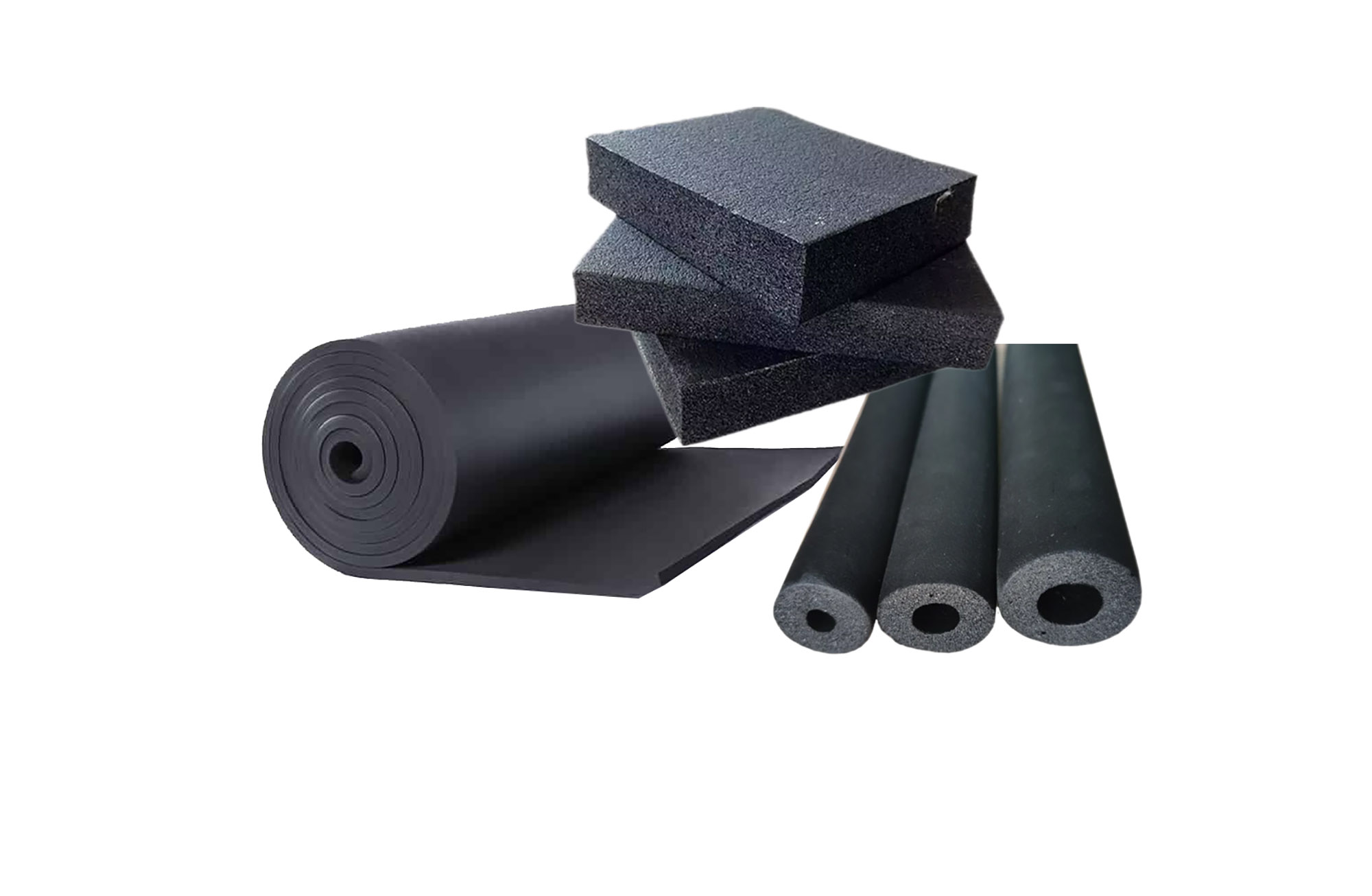
Key Properties of Rubber Foam Insulation: Fire Rating, Moisture Resistance, and Thermal Conductivity
One day, I received a call from SGS.
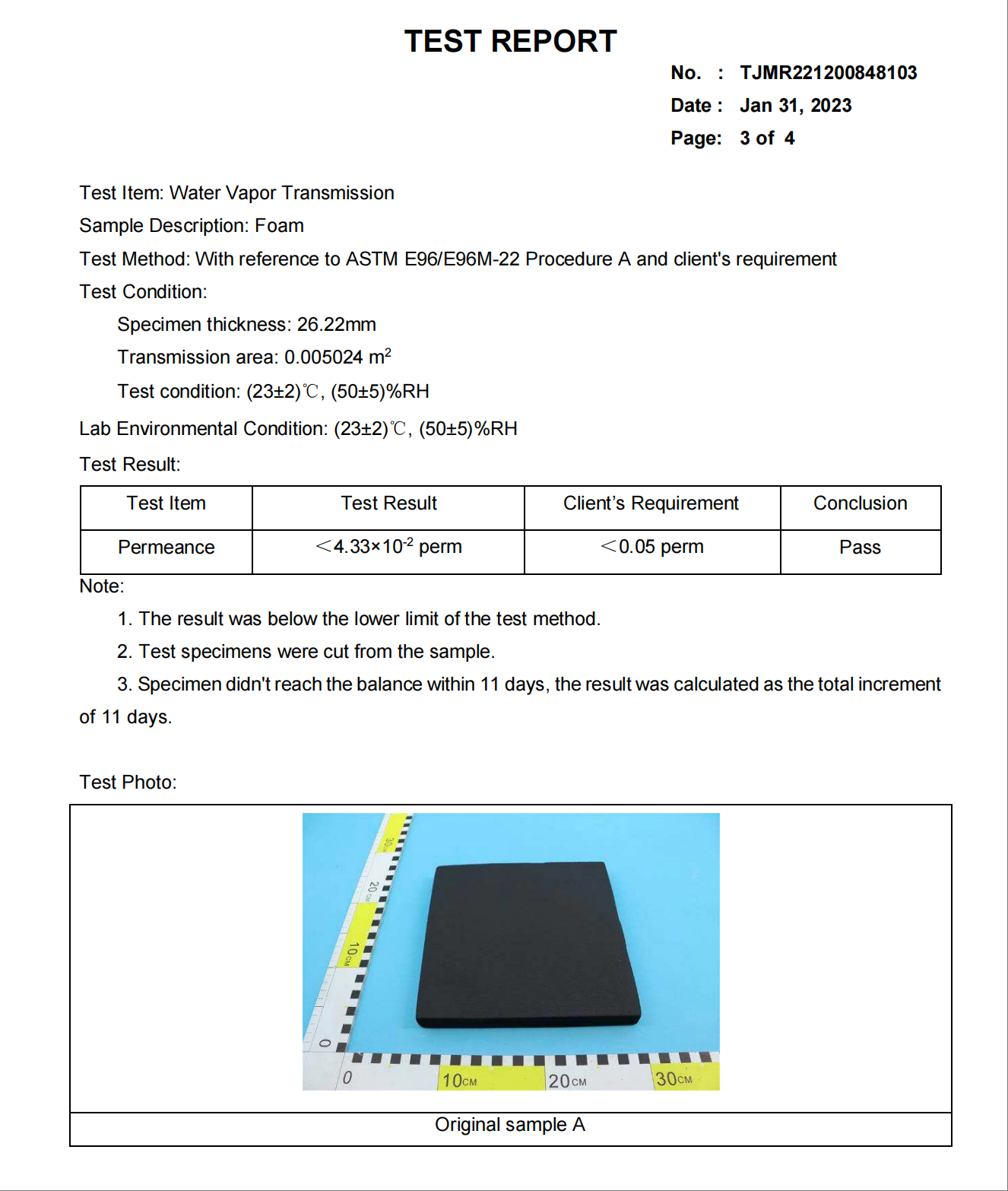
They told me that our rubber foam insulation had been under water vapor transmission testing for 11 days, yet the instrument still detected no measurable vapor. Their equipment’s lower limit was 4.33 × 10⁻² perm, so the only value they could place on the report was: “< 4.33 × 10⁻² perm”.
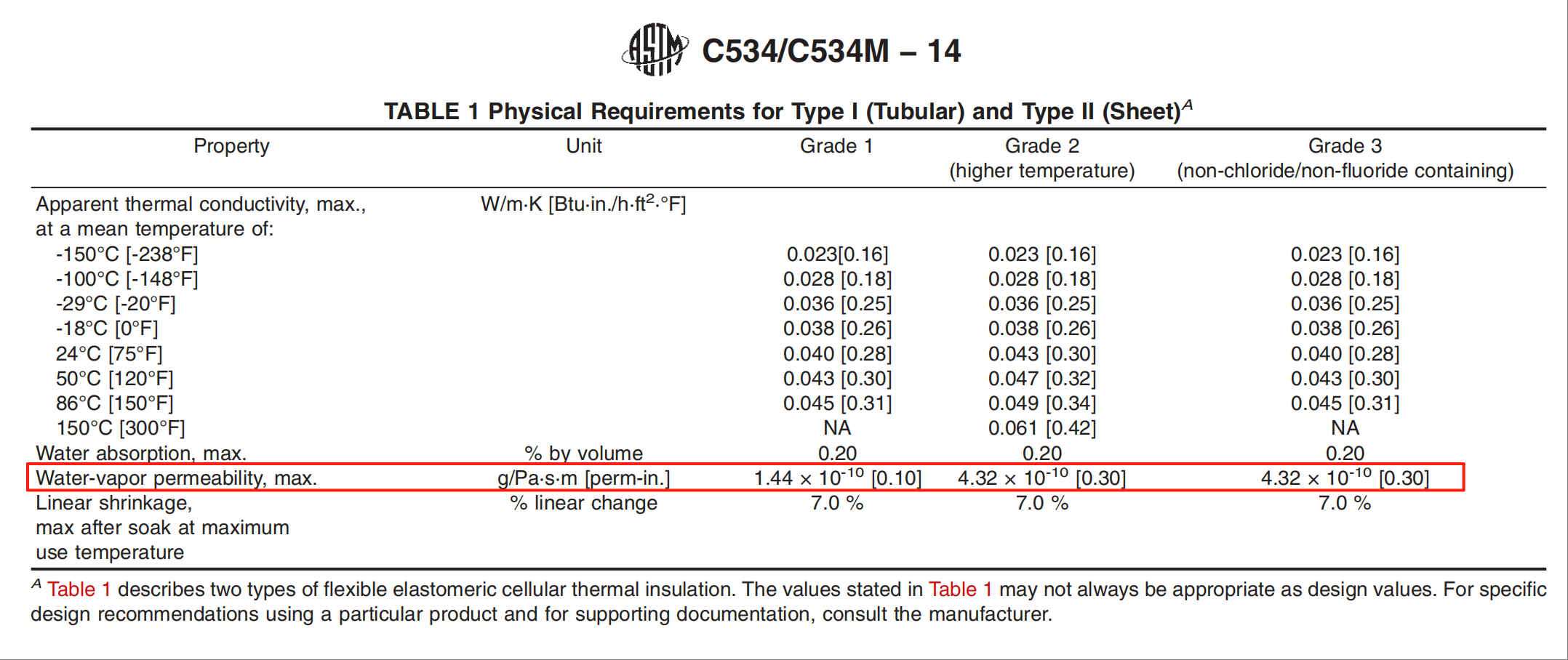
I accepted the result with satisfaction—because even this “less-than” value already performs better than ASTM C534 Grade 1 (≤ 0.10 perm), the highest level for water vapor transmission.
It was the first time I truly felt how powerful closed-cell rubber foam is in resisting water vapor. Water vapor penetration is the silent killer of insulation performance. When moisture infiltrates insulation materials, it drastically reduces thermal efficiency and can lead to corrosion, mold growth, and structural deterioration. This is where rubber foam insulation truly shines.
The ASTM C534 standard categorizes flexible elastomeric cellular insulation materials into three grades, different grade has different requirement on water vapor permeability.
Unit Conversion Explained
Water vapor permeability can be expressed in different units across standards:
- US Customary: perms (grains/h·ft²·inHg)
- International: g/(Pa·s·m)
The conversion factor is approximately: 1 perm ≈ 1.459×10⁻⁹ g/(Pa·s·m). Understanding this conversion helps in comparing products tested under different standard systems. Learn more about rubber foam insulation on Wikipedia.
Rubber Foam Insulation Fire Rating: Beyond Moisture Resistance
While water vapor resistance protects against gradual performance decay, fire performance addresses immediate safety concerns. Different regions have developed their own classification systems, each with specific testing methodologies and criteria.
China’s Fire Classification System
In China, the GB 8624 standard classifies building materials’ burning behavior into four main categories:
- A (Non-combustible)
- B1 (Difficult to burn)– The classification that high-quality rubber foam insulation typically achieves
- B2 (Combustible)
- B3 (Flammable)
The testing methodology often involves determining the oxygen index(the minimum oxygen concentration that supports combustion) and vertical burning tests. Materials with higher oxygen index values (typically ≥32 for B1 classification) offer better flame resistance.
North American Standards (USA/Canada)
The North American system relies heavily on ASTM E84(Standard Test Method for Surface Burning Characteristics of Building Materials), which measures:
- Flame Spread Index (FSI): How quickly flames spread across the material surface
- Smoke Developed Index (SDI): The amount of smoke generated during combustion
Classifications include:
- Class A: FSI 0-25, SDI 0-450 (Excellent) (Typical Requirement for Rubber Foam is FSI < 25, SDI < 50)
- Class B: FSI 26-75, SDI 0-450 (Good)
- Class C: FSI 76-200, SDI 0-450 (Moderate)
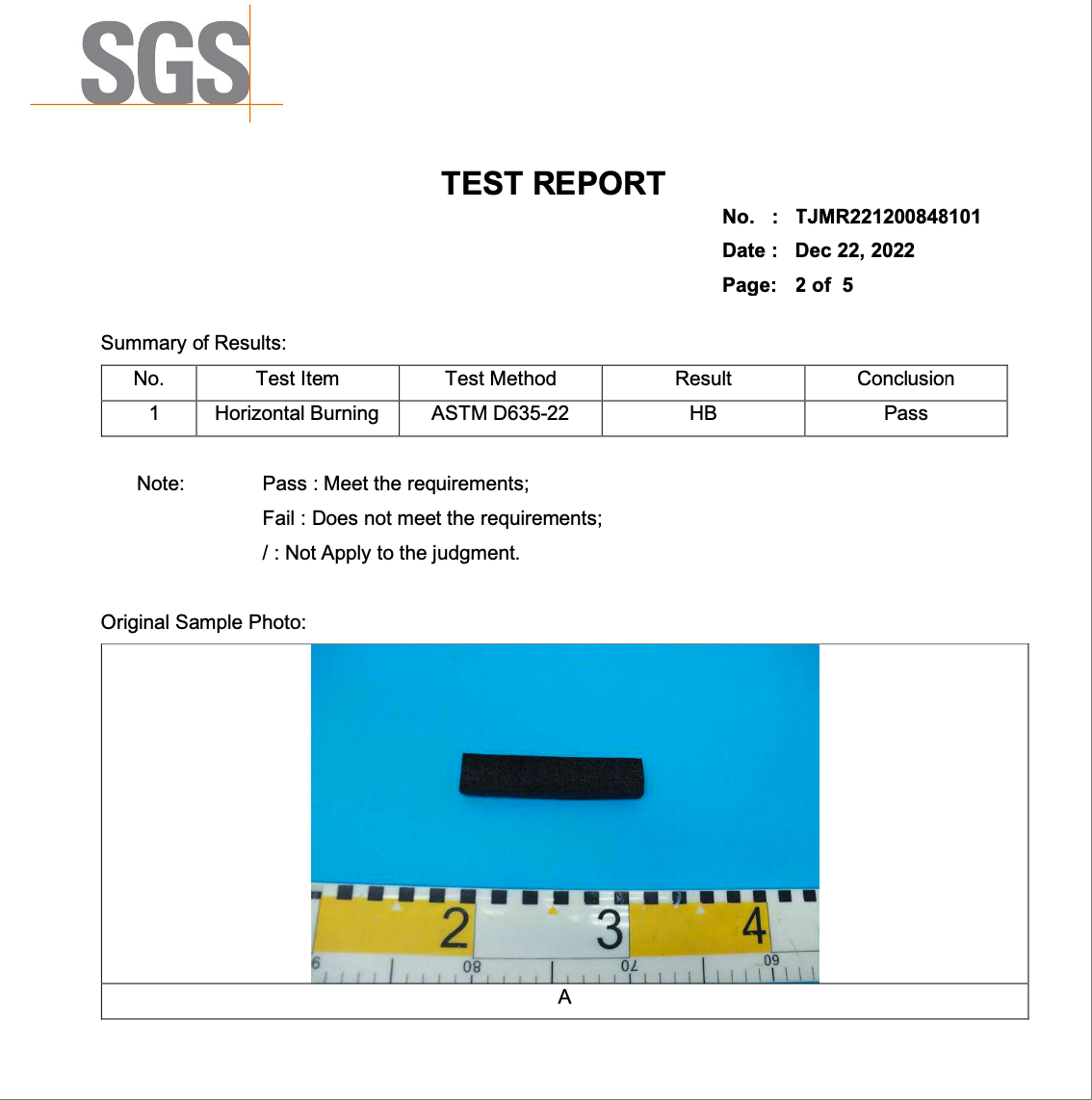
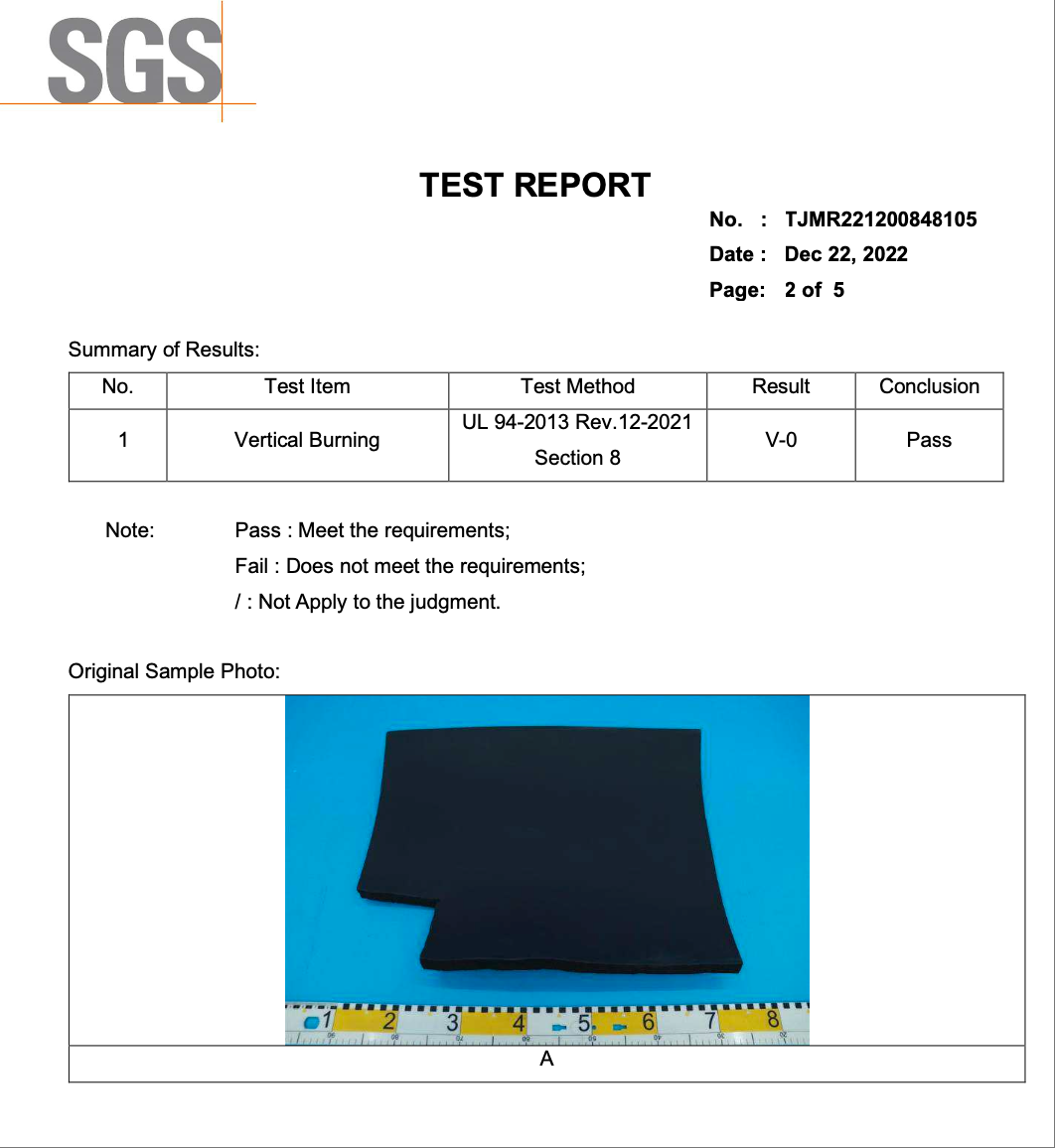
UL 94 (for material classification) V-0, V-1 levels for self-extinguishing
Ecoin rubber fire performance testing report.
European Standards
The European system (EN 13501-1) provides a more detailed classification that includes not only flame spread but also other factors like:
- A1, A2(Non-combustible)
- B, C(Limited contribution to fire)
- D, E, F(Combustible with increasing participation)
The classification also includes additional suffixes for smoke production (s1, s2, s3) and burning droplets (d0, d1, d2).
Australian Standards
Australia follows the AS/NZS 1530.3 standard, which groups materials into:
- Group 1(Highest resistance to fire)
- Group 2
- Group 3
- Group 4(Lowest resistance to fire)
The test measures the spread of flame under specific conditions and assigns classifications accordingly
The Core of Insulation: Thermal Conductivity Requirements
EcoIn’s rubber foam insulation products meet all three of these critical performance requirements.
Thermal conductivity (λ-value) determines how well insulation reduces heat transfer.
Although specific requirements differ, most international standards expect low λ-values in the range suitable for rubber foam.
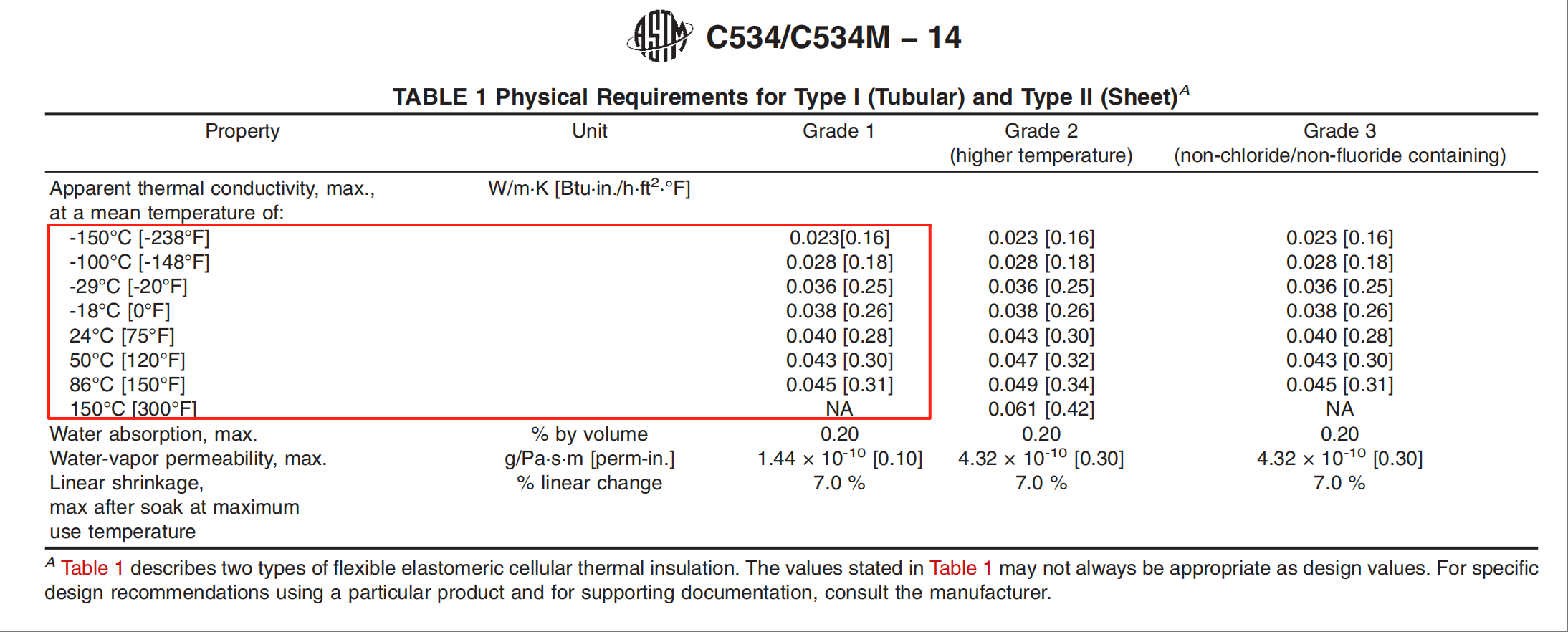
Below is the thermal conductivity requirement in ASTM C534.
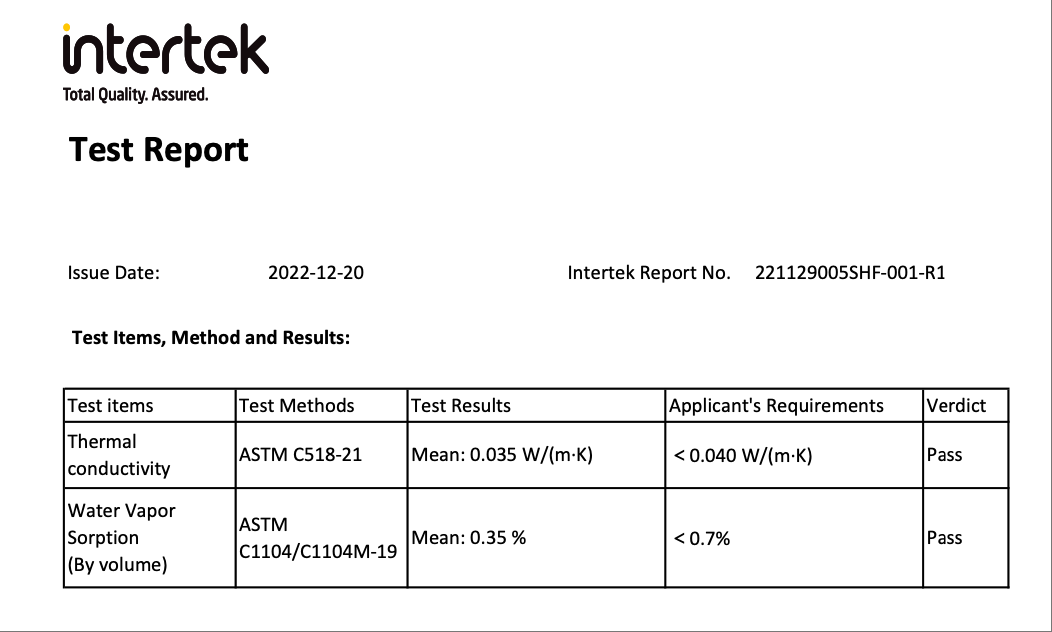
Ecoin rubber foam thermal conductivity testing report
What makes rubber foam exceptional is that this low thermal conductivity remains stable over time, thanks to its closed-cell structure that prevents moisture ingress—the primary cause of insulation performance degradation in other materials.