How is Rockwool Pipe Insulation Produced?
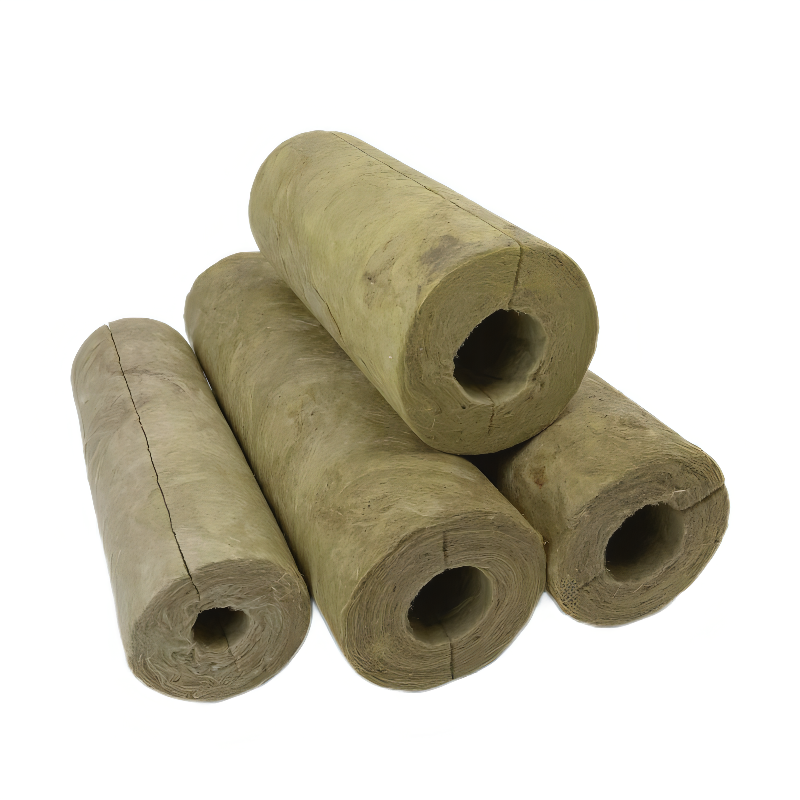
Rockwool pipe insulation is manufactured through a precise multi-step process that converts raw mineral materials into high-performance cylindrical sections. These sections insulate pipes across industrial, HVAC, and plumbing applications. According to Wikipedia’s article on mineral wool, the material is produced by melting rock and slag at extremely high temperatures, then spinning the molten material into fine fibres that are bonded and formed into the desired shape.
There are two main production methods for rockwool pipe insulation: manual (hand-wrapping) and machine production. Machine manufacturing delivers consistent wall thickness, uniform density, and precise dimensions — making it the preferred method for commercial and industrial supply chains worldwide.

The 3-Step Production Process for Rockwool Pipe Insulation
Understanding the manufacturing steps helps buyers evaluate quality and choose the right pipe insulation for their projects. EcoIn’s production line follows strict quality protocols at each stage to ensure consistent performance.
Step 1 — Raw Material Melting
Basalt rock and industrial slag are loaded into a cupola furnace and heated to approximately 1,500°C. At this temperature the minerals melt completely into a liquid state. The mineral composition — particularly the basalt-to-slag ratio — directly determines the final density and thermal resistance of the finished sections. EcoIn carefully monitors and controls this ratio in every production batch to maintain product consistency.
High-quality basalt from certified quarries is preferred because it contains fewer impurities than lower-grade materials. Slag sourced from steel production is added to adjust viscosity and fibre diameter. Both raw materials are weighed precisely before charging the furnace.
Step 2 — Fibre Spinning and Binder Application
The molten rock flows from the furnace onto a set of high-speed spinning wheels, typically rotating at 3,000–5,000 rpm. Centrifugal force throws the liquid outward and draws it into fine mineral fibres with diameters of 4–7 microns. A thermosetting resin binder and water-repellent oil are sprayed onto the fibres as they form in the spinning chamber.
The binder gives the finished product its structural integrity and compression resistance. The oil treatment improves moisture repellency and reduces the itchiness of raw fibres during installation. The grade of resin binder determines the maximum service temperature of the product — phenolic resins support up to 250°C, while special high-temperature binders allow service up to 650°C for steam and industrial applications.
Step 3 — Curing, Pipe Forming, and Facing
The fibre mat passes through a curing oven at around 200°C, where heat activates and sets the resin binder. This step locks the fibres in place and gives the mat its final bulk density. After curing, a pipe-wrapping machine winds and compresses the mat around a mandrel matching the required inner diameter. The wrapped section is then cut to standard lengths — typically 1.0 m or 1.2 m — using a precision circular saw.
Finally, the cut sections receive their facing material. Options include plain kraft paper for general applications, aluminium foil for vapour barrier requirements, ASJ (All Service Jacket) for above-ambient HVAC insulation, and stainless steel wire mesh for high-temperature industrial pipelines. Facing is bonded with a self-adhesive lap joint so installers can wrap sections securely around pipes in the field.
Manual vs. Machine-Made Production
Hand-wrapped sections can be produced quickly in small batches and non-standard sizes, but wall thickness and density often vary between individual pieces. This variation can create thermal bridging at pipe joints and makes it harder to achieve consistent energy efficiency targets in large installations.
Machine-made rockwool pipe insulation maintains ±2 mm dimensional tolerance and consistent bulk density (typically 60–180 kg/m³). The tighter tolerances reduce installation waste, speed up assembly time, and improve long-term thermal performance across the entire pipeline system.
EcoIn’s fully automated production line runs real-time quality checks — including density sampling, dimension verification, and binder content testing — at each stage. Every batch receives a certificate of conformity before shipment, ensuring compliance with export standards for North America, Europe, the Middle East, and Southeast Asia. You can learn more about our mineral wool products on the glass wool product page.
Key Specifications
EcoIn supplies mineral wool pipe sections in the following standard configurations to suit a wide range of piping systems:
- Inner diameter: 15 mm – 630 mm (custom sizes available on request)
- Wall thickness: 25 mm – 100 mm
- Bulk density: 60 kg/m³ – 180 kg/m³
- Maximum service temperature: up to 650°C
- Standard lengths: 1.0 m and 1.2 m
- Facing options: plain, aluminium foil, ASJ, kraft paper, wire mesh
Applications
Rockwool pipe insulation produced by this process is used in a wide range of industrial and building applications. In HVAC systems, rockwool pipe insulation reduces heat gain on chilled water lines and heat loss on hot water supply pipes. In industrial plants they protect steam lines, condensate return pipes, and process pipelines operating at elevated temperatures. In shipbuilding and offshore applications they provide fire-rated insulation for mechanical and ventilation pipes.
The closed-cell structure of the mineral fibres combined with the resin binder delivers low thermal conductivity (λ ≈ 0.034–0.040 W/m·K at 25°C), excellent fire resistance (non-combustible to EN ISO 1182), and good sound absorption properties — making mineral wool pipe sections one of the most versatile and specified insulation products in the global market.
Frequently Asked Questions
Quality Standards and Testing
High-quality rockwool pipe insulation must meet internationally recognised standards before they can be used in commercial and industrial projects. EcoIn’s production process is designed to comply with ASTM C547 (the North American standard for mineral fibre pipe and tank insulation), EN 14303 (the European standard for factory-made mineral wool pipe insulation), and GB/T 11835 (the Chinese national standard for rock wool products).
Each batch of rockwool pipe insulation undergoes the following standard tests before release:
- Bulk density: Measured per ASTM C302 to verify the declared nominal density within ±10% tolerance.
- Thermal conductivity (λ): Measured using a guarded hot plate or heat flow meter at 25°C and 200°C reference temperatures.
- Compressive strength: Tested per ASTM C165 to confirm the pipe section can withstand typical clamping forces during installation.
- Moisture uptake: Immersion test to verify water repellent treatment effectiveness, especially for below-ambient applications.
- Dimensional stability: Inner diameter, outer diameter, and wall thickness measured against nominal specifications.
Third-party test reports from CNAS-accredited laboratories are available on request for customers who require independent verification of product performance. This is especially important for projects in regulated industries such as LNG, petrochemicals, and district heating networks.
How to Order Rockwool Pipe Insulation from EcoIn
Ordering from EcoIn is straightforward. Start by providing the pipe outer diameter (or nominal pipe size), the required wall thickness, the operating temperature range, and the facing type. EcoIn’s technical sales team will confirm product selection, issue a formal quotation, and arrange a sample shipment if needed before a full production order.
Minimum order quantities vary by product type — standard sizes are typically available in smaller quantities, while custom inner diameters and special facings require a minimum production run. Lead times range from 15 to 45 days depending on order volume and customisation requirements.
Contact EcoIn through the Get Quote page to request a formal quotation for rockwool pipe insulation for your project.
How to Install Rockwool Pipe Insulation
Proper installation is essential for achieving the rated thermal performance of rockwool pipe insulation. Following the correct procedure also extends service life and prevents moisture ingress at joints and seams.
Pre-Installation Checks
Before installing rockwool pipe insulation, verify that the pipe surface is clean, dry, and free from rust, scale, and loose coatings. Check that the inner diameter of the insulation section matches the outer diameter of the pipe — a tight fit is required to prevent air gaps that reduce thermal efficiency. Confirm that the operating temperature falls within the rated service range of the selected grade.
Installation Steps
Slit the pipe section along its pre-cut groove (most factory sections are supplied half-split for easy fitting). Open the two halves and fit them around the pipe, ensuring the inner surface contacts the pipe uniformly with no voids. Close the two halves and secure the longitudinal joint with the self-adhesive lap or with a purpose-made mineral wool adhesive tape. For sections without a pre-applied adhesive, use a compatible contact adhesive compatible with mineral fibre substrates.
At pipe joints, fittings, and valves, cut the rockwool pipe insulation to fit as closely as possible. Use scraps of mineral wool blanket to fill any irregular gaps before applying a metal jacket or covering tape. For outdoor installations or applications where the insulation will be exposed to mechanical damage, apply an aluminium jacket over the insulation and secure with stainless steel banding at maximum 450 mm centres.
Common Installation Mistakes to Avoid
Leaving gaps between consecutive sections is one of the most common errors in rockwool pipe insulation installation. Even a 5 mm gap can create a thermal bridge that significantly increases heat loss at that point. Always push successive sections tightly together and seal the butt joints with tape or adhesive.
Over-compressing the insulation by tightening metal banding too aggressively increases bulk density locally and reduces thermal resistance. Follow the manufacturer’s banding tension guidelines. Similarly, do not use standard duct tape as a substitute for purpose-made insulation tape — duct tape adhesive degrades rapidly at elevated temperatures and will fail within weeks.
Comparison: Rockwool Pipe Insulation vs. Other Pipe Insulation Materials
When specifying pipe insulation for industrial and HVAC applications, project engineers commonly compare mineral wool to alternative materials. Here is a brief comparison of the key performance attributes:
- Rockwool pipe insulation vs. calcium silicate: Calcium silicate supports higher service temperatures (up to 1,000°C) but is heavier and more fragile. Mineral wool is preferred for moderate-temperature applications where weight is a constraint.
- Rockwool pipe insulation vs. elastomeric foam: Elastomeric foam offers superior vapour barrier performance for chilled pipe applications but has a lower maximum service temperature (typically 105°C). For hot pipe applications above 105°C, mineral wool is the standard choice.
- Rockwool pipe insulation vs. glass wool: Both are mineral fibre products with similar thermal performance. Mineral wool (rockwool) generally supports higher service temperatures and has better resistance to compression, making it preferred for mechanical and industrial applications.